How Do Incinerators for Solid Waste Work, and What Should Buyers Know Before Choosing a System?
August 20, 2026
Incinerators for solid waste use controlled combustion to reduce waste volume and treat combustible materials under managed operating conditions. A complete system typically includes waste feeding, a combustion chamber, controlled air supply, temperature monitoring, flue gas treatment, and ash handling. The process does not simply mean burning waste in a furnace. The system must control combustion conditions and manage the gases and residues created during treatment. For B2B buyers, the main decision involves matching the incinerator design with waste composition, daily capacity, moisture content, operating temperature, emission requirements, and local regulations. For example, an industrial facility may generate packaging waste and process residues, while a healthcare facility handles infectious waste. Both may use thermal treatment, but their feed characteristics and emission-control requirements can differ significantly.
What Happens Inside a Solid Waste Incinerator?
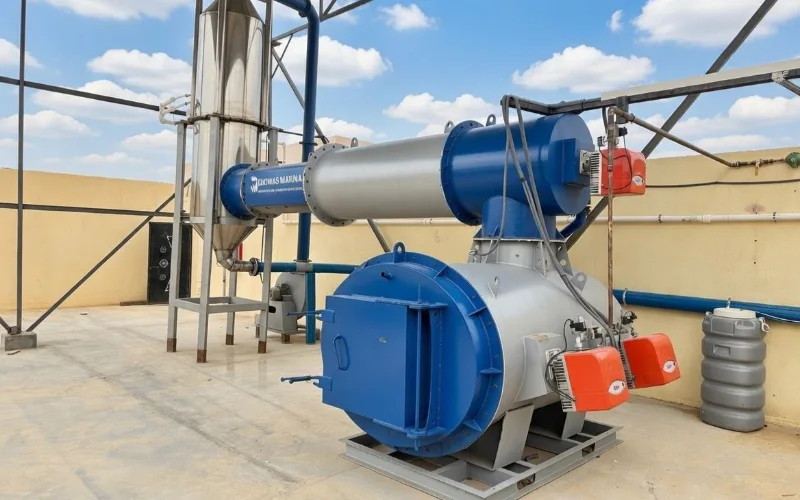
The basic principle of solid waste incineration is controlled thermal oxidation. Waste enters a combustion chamber where heat and oxygen support the combustion process.
The system maintains suitable operating conditions through fuel supply, air distribution, temperature control, and combustion chamber design. The exact process depends on the waste type and the equipment configuration.
Unlike uncontrolled open burning, an engineered incineration system manages the combustion zone and directs the resulting flue gas through treatment equipment before discharge.
The process also produces solid residues. These usually include bottom ash from the combustion chamber and finer residues collected by flue gas treatment equipment.
The U.S. Environmental Protection Agency explains that municipal waste combustion can reduce the amount of solid waste requiring landfill disposal while also allowing energy recovery in suitable facilities. EPA also identifies combustion as one part of a broader waste management hierarchy.
The Main Stages of Incineration
A typical solid waste treatment process includes:
- Waste reception and storage
- Waste feeding
- Primary combustion
- Secondary combustion or afterburning
- Flue gas cooling
- Air pollution control
- Induced draft and exhaust
- Ash collection and handling
Not every system uses exactly the same configuration.
For example, a small modular unit may use a relatively compact furnace and control system. A larger industrial installation may include several combustion chambers, automated feeding equipment, heat recovery, and multiple flue gas treatment stages.
The waste itself also affects the process.
High-moisture waste requires more thermal energy to evaporate water before combustion can proceed effectively. Waste with high calorific value can create different temperature and air-control requirements.
This is why buyers should provide a detailed waste analysis before selecting equipment.
Which Components Make Up an Incineration System?
A complete incineration system contains several connected components. The combustion chamber is only one part of the installation.
Each component contributes to stable operation and environmental control.
The feeding system determines how waste enters the furnace. The combustion chamber provides the controlled environment for thermal treatment. Air supply equipment delivers oxygen for combustion. Sensors and controls monitor operating conditions.
Downstream equipment then handles the flue gas and combustion residues.
Waste Feeding System
The feeding system should match the physical characteristics of the waste.
Waste may arrive in bags, containers, boxes, bulk form, or other configurations. The system may use manual loading, mechanical charging, hydraulic feeding, or automated feeding.
The buyer should consider:
- Waste density
- Particle size
- Container type
- Moisture content
- Feeding frequency
- Daily waste volume
- Operator requirements
For example, a facility generating relatively uniform industrial waste may use a more predictable feeding process. Mixed solid waste can require greater attention to feeding consistency.
Primary Combustion Chamber
The primary chamber receives the waste and provides the main combustion zone.
The furnace design affects residence time, air distribution, temperature control, and ash removal.
Some systems use fixed hearths. Others use moving grates or other mechanical arrangements.
The appropriate design depends on the waste characteristics and required capacity.
Secondary Combustion Chamber
Many systems use a secondary combustion zone to further treat combustible gases generated during primary combustion.
This stage can improve the destruction of remaining combustible compounds when the system maintains suitable temperature, residence time, and oxygen conditions.
These operating parameters require careful engineering.
The equipment should also include temperature measurement and control systems.
Flue Gas Treatment
Flue gas treatment forms a critical part of modern incineration.
Combustion can generate particulate matter and other pollutants. Depending on the waste and regulatory requirements, treatment may address particulate matter, acid gases, nitrogen oxides, heavy metals, and organic pollutants.
EPA regulations for solid waste incineration address pollutants including particulate matter, carbon monoxide, dioxins and furans, sulfur dioxide, nitrogen oxides, hydrogen chloride, lead, mercury, and cadmium.
The exact control technology depends on the waste stream and applicable regulations.
How Does an Incinerator Control Emissions?
Emission control begins with combustion management, but it does not end there.
A properly designed system combines stable combustion with downstream pollution-control equipment.
The purpose is to reduce pollutants in the flue gas before it reaches the exhaust stack.
A modern system may include several treatment stages.
Particulate Control
Particulate matter can come from ash and other combustion products.
A baghouse or other particulate control device can capture fine particles from the flue gas stream.
EPA describes high-efficiency baghouse filtration as one method used at municipal waste combustion facilities.
The equipment selection depends on gas temperature, dust loading, moisture, chemical composition, and required emission limits.
Acid Gas Control
Certain waste materials can generate acidic gases during combustion.
Treatment systems may use alkaline reagents to neutralize these compounds.
Common approaches include dry sorbent injection, semi-dry systems, or wet scrubbing.
The selection depends on the waste composition and regulatory requirements.
Nitrogen Oxide Control
Combustion conditions can generate nitrogen oxides.
Depending on the system, NOx control may involve combustion optimization, selective non-catalytic reduction, selective catalytic reduction, or other technologies.
The correct approach depends on the required emission limits and plant configuration.
Activated Carbon and Other Controls
Activated carbon injection can help control certain contaminants, including mercury and some organic compounds.
The exact treatment train should come from an engineering assessment.
Buyers should not select pollution-control equipment based only on a standard catalog configuration.
How Does Waste Type Affect Incinerator Selection?
Waste composition is one of the most important variables in incinerator selection.
Two facilities can generate the same daily waste weight but require different equipment.
A waste stream with high moisture behaves differently from dry packaging waste. A waste stream containing significant inorganic material produces different ash characteristics from organic-rich waste.
Buyers should therefore provide a waste profile before requesting a final equipment specification.
Important Waste Characteristics
The supplier should review:
| Waste Parameter | Why It Matters |
|---|---|
| Daily quantity | Determines required treatment capacity |
| Moisture content | Influences energy demand |
| Calorific value | Affects combustion stability |
| Particle size | Influences feeding and combustion |
| Ash content | Affects residue handling |
| Organic content | Influences combustion behavior |
| Chlorine content | Can affect acid gas formation |
| Heavy metals | Influences emission-control requirements |
| Packaging form | Determines feeding method |
| Waste variability | Affects process control |
Caption: Waste characteristics that influence solid waste incinerator selection.
This information helps engineers determine the combustion chamber size and auxiliary systems.
For example, a facility processing relatively dry industrial waste may require less auxiliary fuel during normal operation. A wet waste stream may require additional thermal support during startup or specific operating conditions.
The waste profile also helps determine ash handling requirements.
Why Capacity Alone Is Not Enough
A buyer may request an incinerator rated at 500 kg/h.
That figure does not fully define the equipment requirement.
The supplier also needs to know what material represents the 500 kg/h.
If the waste contains a high proportion of moisture and non-combustible material, the thermal load can differ significantly from a dry combustible stream.
The buyer should therefore provide both mass flow and waste composition.
This creates a more realistic equipment specification.
What Is the Difference Between Industrial and Medical Waste Incinerators?
The basic combustion principle remains similar, but the waste stream changes the engineering requirements.
An Industrial Incinerator can treat selected industrial and commercial waste streams when the equipment matches the material and applicable regulations.
Industrial waste may include packaging, production residues, contaminated materials, and other combustible solid waste.
Medical and clinical waste creates additional considerations because the waste may contain infectious materials and other regulated components.
A biomedical waste incinerator is designed for applications involving biomedical waste and should be selected according to the actual waste profile and local requirements.
Clinical Waste Applications
Clinical waste can include contaminated materials from healthcare facilities.
The system should support controlled thermal treatment while limiting exposure during waste handling and feeding.
A Clinical Waste Incinerator may therefore include features designed around healthcare waste handling and controlled combustion.
The important point for buyers is that waste classification should come before equipment selection.
A supplier should understand the waste source, composition, quantity, packaging, and regulatory category.
Why One Incinerator Does Not Fit Every Waste Stream
A general-purpose incinerator cannot automatically handle every waste type.
Some wastes require specialized treatment or may be unsuitable for thermal treatment under certain operating conditions.
For example, materials with unusual chemical properties may require separate assessment before combustion.
The buyer should provide safety data and waste composition information where applicable.
This allows the supplier to determine whether the proposed system matches the intended application.
How Do Energy Recovery and Ash Handling Work?
Incineration converts the chemical energy in combustible waste into thermal energy.
The heat can sometimes support energy recovery.
In waste-to-energy facilities, combustion heat can generate steam for electricity production or other useful applications. EPA describes a typical process where combustion heat converts water into steam, which then drives a turbine generator.
Not every industrial incinerator includes energy recovery.
For smaller systems, the primary objective may focus on waste treatment rather than electricity generation.
Heat Recovery Options
Depending on plant scale, the system may include:
- Waste heat boilers
- Hot water generation
- Steam generation
- Air preheating
- Process heat recovery
- Electricity generation
The economic case depends on waste quantity, calorific value, operating hours, local energy prices, and plant requirements.
A buyer should therefore evaluate energy recovery as part of the complete project rather than assume it automatically improves project economics.
What Happens to the Ash?
Incineration does not eliminate all waste.
Combustion leaves solid residues that require proper collection, storage, testing, transport, and disposal or reuse according to applicable rules.
EPA notes that municipal waste combustion produces bottom ash and fly ash. The composition and management requirements depend on the waste and combustion process.
Ash handling should therefore form part of the original equipment plan.
A system may include ash conveyors, discharge systems, containers, cooling arrangements, or other handling equipment.
The buyer should also confirm how local regulations classify the resulting ash.
How Should Buyers Evaluate an Industrial Incineration System?
Purchasing an incinerator involves more than comparing furnace dimensions and rated capacity.
The buyer should evaluate the complete Incineration System, including combustion, feeding, air supply, emission control, controls, ash handling, and supporting equipment.
A useful evaluation should cover both technical and operational factors.
| Evaluation Area | Key Questions |
|---|---|
| Waste compatibility | Can the system treat the intended waste? |
| Capacity | What is the rated and practical throughput? |
| Combustion | How does the system control temperature and air supply? |
| Residence time | Is the design suitable for the waste type? |
| Emission control | Which pollutants does the treatment train address? |
| Controls | Which parameters can operators monitor? |
| Feeding | Does the feeding system match waste form and density? |
| Ash handling | How does the system collect and discharge residues? |
| Energy use | What auxiliary fuel and power does the system require? |
| Maintenance | Which components require regular servicing? |
| Safety | What interlocks and emergency functions are included? |
| Documentation | What manuals, drawings, and test records are supplied? |
Caption: Practical evaluation criteria for an industrial solid waste incineration system.
Factory Testing
Factory testing can help verify equipment performance before shipment.
The supplier should demonstrate key functions according to the agreed test plan.
Depending on the project, testing may cover:
- Feeding operation
- Burner operation
- Temperature control
- Fan operation
- Control system functions
- Alarm and interlock functions
- Flue gas treatment equipment
- Ash discharge
- Emergency shutdown functions
The exact acceptance criteria should appear in the purchase agreement.
Installation and Commissioning
Installation conditions also affect system performance.
The buyer should prepare suitable foundations, utilities, electrical connections, fuel supply, exhaust arrangements, and access for maintenance.
The supplier should provide installation drawings and utility requirements before delivery.
Commissioning should then verify the complete system rather than only the furnace.
This approach helps identify interface problems between the combustion chamber and auxiliary equipment.
What Regulations Should Buyers Consider Before Installing an Incinerator?
Regulatory requirements vary by country, waste category, plant size, and combustion technology.
Buyers should identify the applicable rules before purchasing equipment.
For example, the U.S. Clean Air Act includes Section 129 requirements for several solid waste incineration categories. EPA identifies separate regulatory frameworks for municipal, commercial and industrial, medical, and other solid waste incinerators.
Large municipal waste combustors also face specific federal emission standards. EPA updated its large municipal waste combustor standards in March 2026.
This demonstrates why buyers should not treat emission compliance as a generic equipment feature.
The supplier needs to know the destination country’s requirements.
The buyer should also confirm:
- Required permits
- Emission limits
- Waste classification
- Stack requirements
- Monitoring requirements
- Ash disposal rules
- Operating conditions
- Reporting obligations
Why Local Regulations Matter
An incinerator designed for one market may require modifications for another.
Emission limits, monitoring requirements, electrical standards, fuel systems, and permitting procedures can differ.
A responsible equipment specification should therefore reference the destination market.
The supplier can then design the system around those requirements.
How Can Buyers Improve Long-Term Incinerator Performance?
Operational efficiency depends on more than initial equipment selection.
The facility needs consistent operating procedures, maintenance planning, waste management, and monitoring.
Operators should understand the relationship between waste feed, combustion temperature, air supply, and flue gas treatment.
Preventive Maintenance
Regular maintenance should cover:
- Burners
- Refractory lining
- Fans
- Valves
- Sensors
- Thermocouples
- Feed mechanisms
- Grates
- Filters
- Scrubber components
- Ash discharge equipment
- Control systems
The maintenance schedule should follow the equipment manufacturer’s recommendations and actual operating conditions.
Replacement parts should also be planned for components with long procurement times.
Monitor the Right Indicators
Plant managers should monitor more than daily waste throughput.
Useful operating indicators can include:
- Waste feed rate
- Combustion temperature
- Oxygen concentration
- Auxiliary fuel consumption
- Flue gas temperature
- Pressure
- Emission measurements
- Ash production
- Downtime
- Maintenance frequency
These indicators help operators identify changes before they become larger operational problems.
For example, a gradual increase in auxiliary fuel consumption may indicate changes in waste composition or combustion conditions.
A rise in pressure drop across a filter can indicate a maintenance requirement.
Data therefore becomes part of equipment management.
FAQ About Solid Waste Incinerators
What is a Waste Incinerator?
A Waste Incinerator is an engineered system that uses controlled combustion to thermally treat suitable waste. A complete installation can include feeding, combustion, air supply, flue gas treatment, controls, and ash handling.
Does an incinerator completely eliminate solid waste?
No. Combustion reduces the amount of combustible material, but it produces ash and other residues. These residues require appropriate handling and disposal or reuse according to applicable regulations.
What types of waste can an industrial incinerator treat?
The answer depends on the specific incinerator design and waste characteristics. Industrial systems may treat selected commercial or industrial solid waste streams. Buyers should provide a waste analysis before selecting equipment.
Does every incinerator generate electricity?
No. Energy recovery requires additional equipment and suitable operating conditions. Smaller systems may focus primarily on waste treatment.
What is the difference between a primary and secondary combustion chamber?
The primary chamber handles the main waste combustion process. A secondary chamber can provide additional thermal treatment for combustible gases generated during primary combustion.
Why is flue gas treatment necessary?
Combustion can generate particulate matter and other pollutants. Flue gas treatment helps control emissions before exhaust reaches the atmosphere. The required equipment depends on the waste and applicable emission limits.
How do I select the correct incinerator capacity?
Start with daily waste quantity and waste composition. Moisture, calorific value, ash content, and waste variability can affect the actual thermal load.
Can one incinerator handle different types of waste?
Some systems can handle multiple compatible waste streams. However, compatibility depends on waste characteristics and system design. The supplier should review each waste stream before confirming the application.
What should buyers request from an incinerator supplier?
Request technical specifications, process flow diagrams, utility requirements, emission-control details, maintenance information, spare parts lists, installation requirements, and factory test procedures.
How important is local regulatory compliance?
It is critical. Waste treatment and air emissions are regulated differently across markets. Buyers should identify local permitting and emission requirements before finalizing the equipment specification.
Why Biowas Makina for Solid Waste Incineration Projects?
Biowas Makina develops waste treatment equipment for applications that require controlled thermal processing. Its solutions cover different waste categories and project requirements, including industrial, clinical, and biomedical waste applications. For buyers evaluating a new incineration project, the key is to match the combustion technology with the waste composition, treatment capacity, emission requirements, site conditions, and local regulations. Biowas Makina can support this process through equipment selection, system configuration, technical discussions, and project planning. The objective is to build an Incineration System around the actual waste stream rather than selecting equipment from capacity figures alone.
References
The U.S. Environmental Protection Agency provides detailed information on energy recovery from municipal solid waste combustion, including combustion processes, ash generation, energy recovery, and regulatory considerations. EPA also provides current information on solid waste incineration standards under the Clean Air Act. For commercial and industrial applications, buyers can review EPA’s Commercial and Industrial Solid Waste Incineration requirements. EPA’s technical AP-42 Solid Waste Disposal chapter also provides reference material on refuse combustion and related emission factors.
SEO Title: How Do Solid Waste Incinerators Work?
SEO Description: Learn how solid waste incinerators work, from combustion and flue gas treatment to ash handling, capacity selection, and emission control.
SEO Keywords: Waste Incinerator, Industrial Incinerator, Incineration System
Suggested URL Slug: /how-do-incinerators-for-solid-waste-work/