
PCB Decontamination System for Waste Treatment
High-efficiency chemical PCB Dechlorination Systems engineered to reduce PCB levels in transformer oil to below 2 ppm while fully restoring dielectric properties.
-
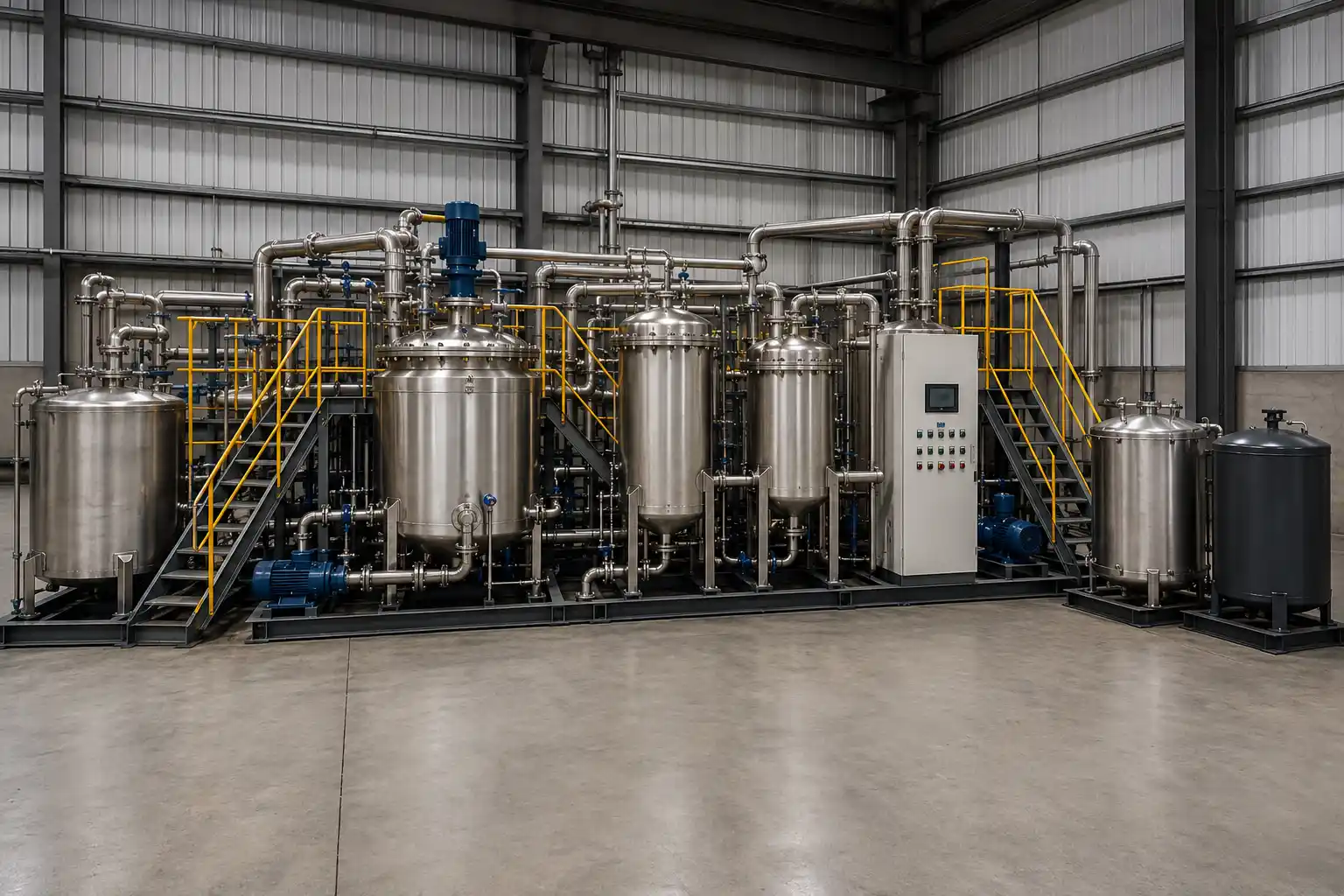
Hazardous Chemical Neutralization
-
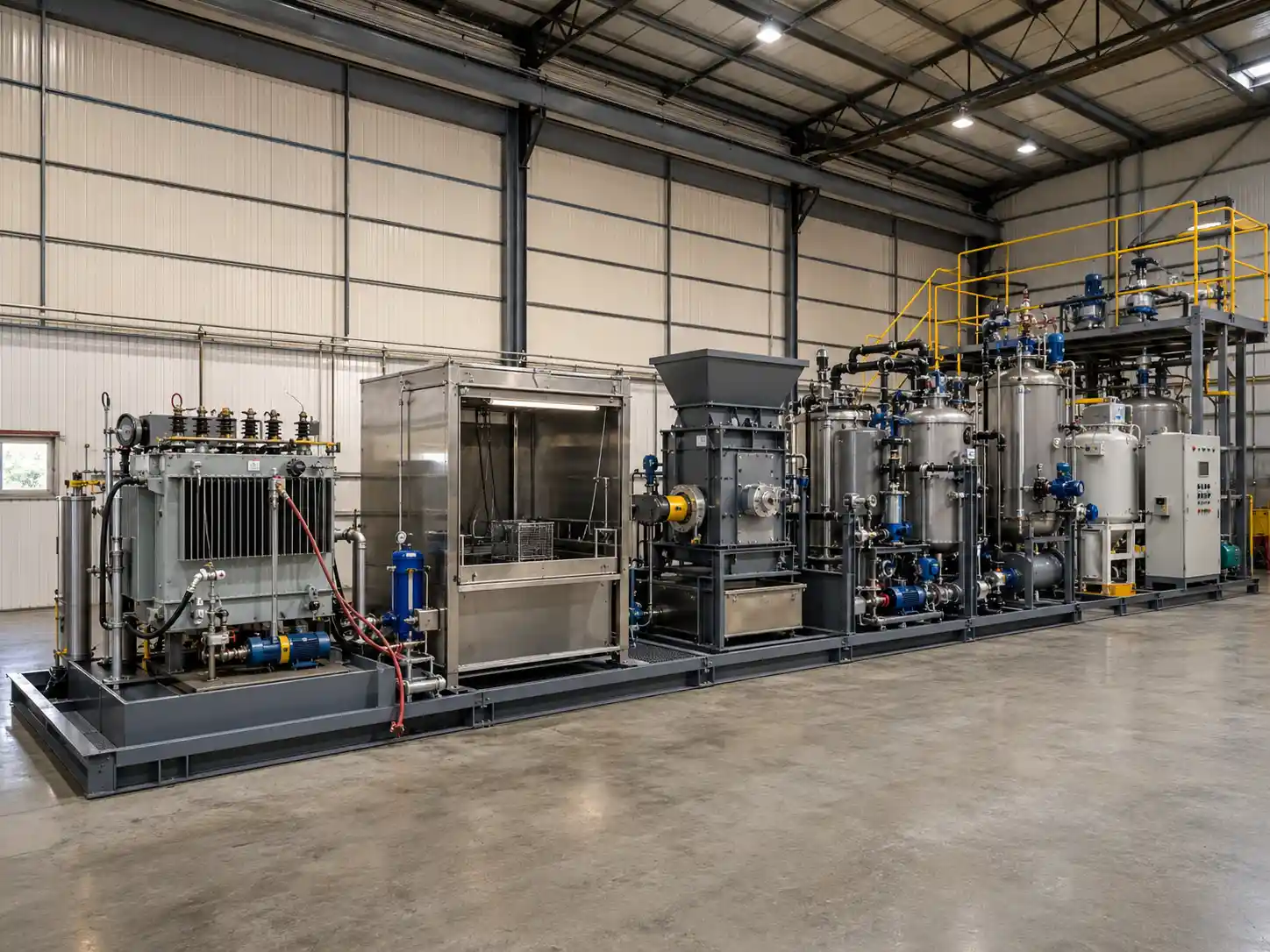
Electrical Equipment Decontamination
-
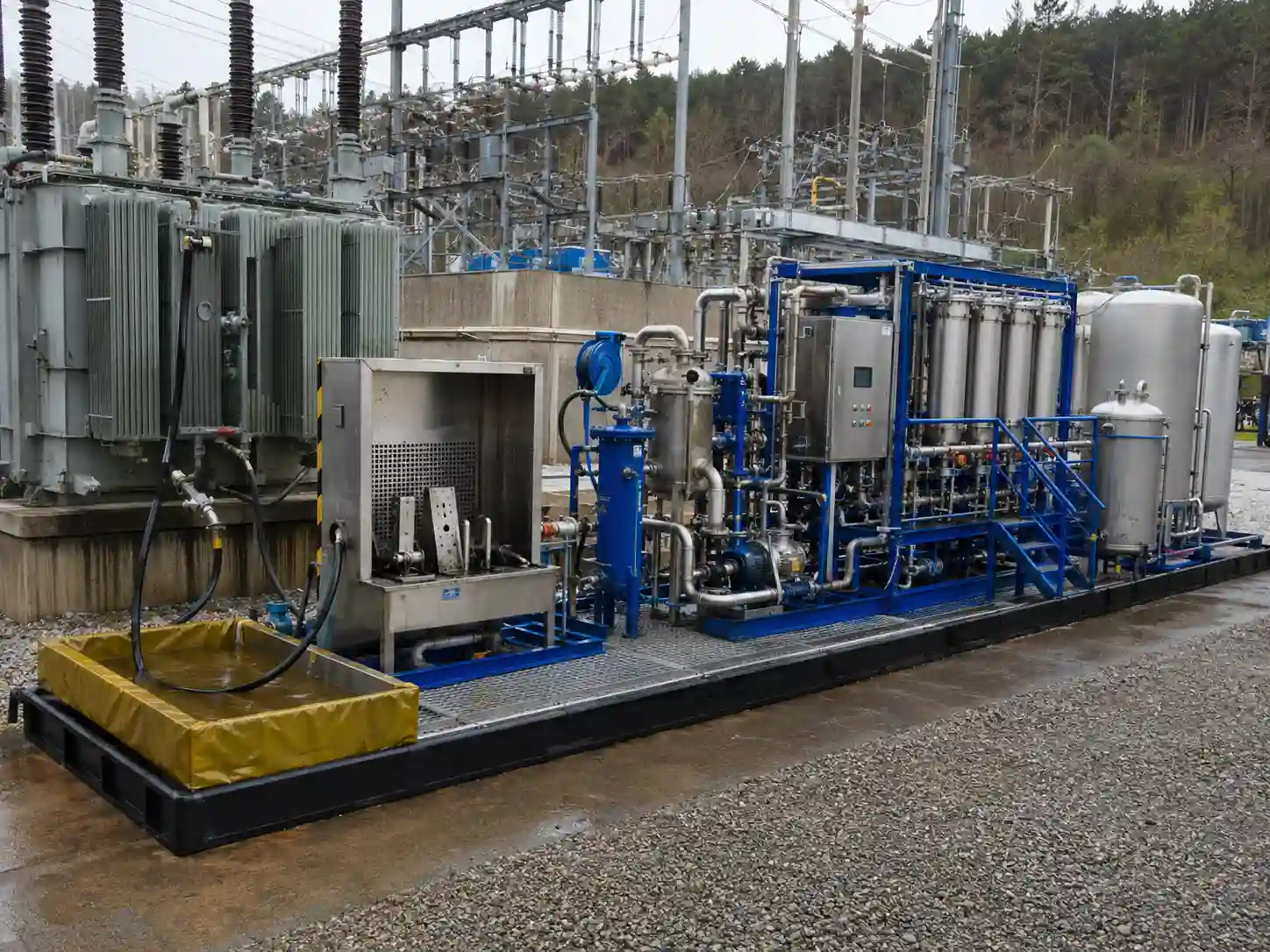
On-site Decontamination Units
-
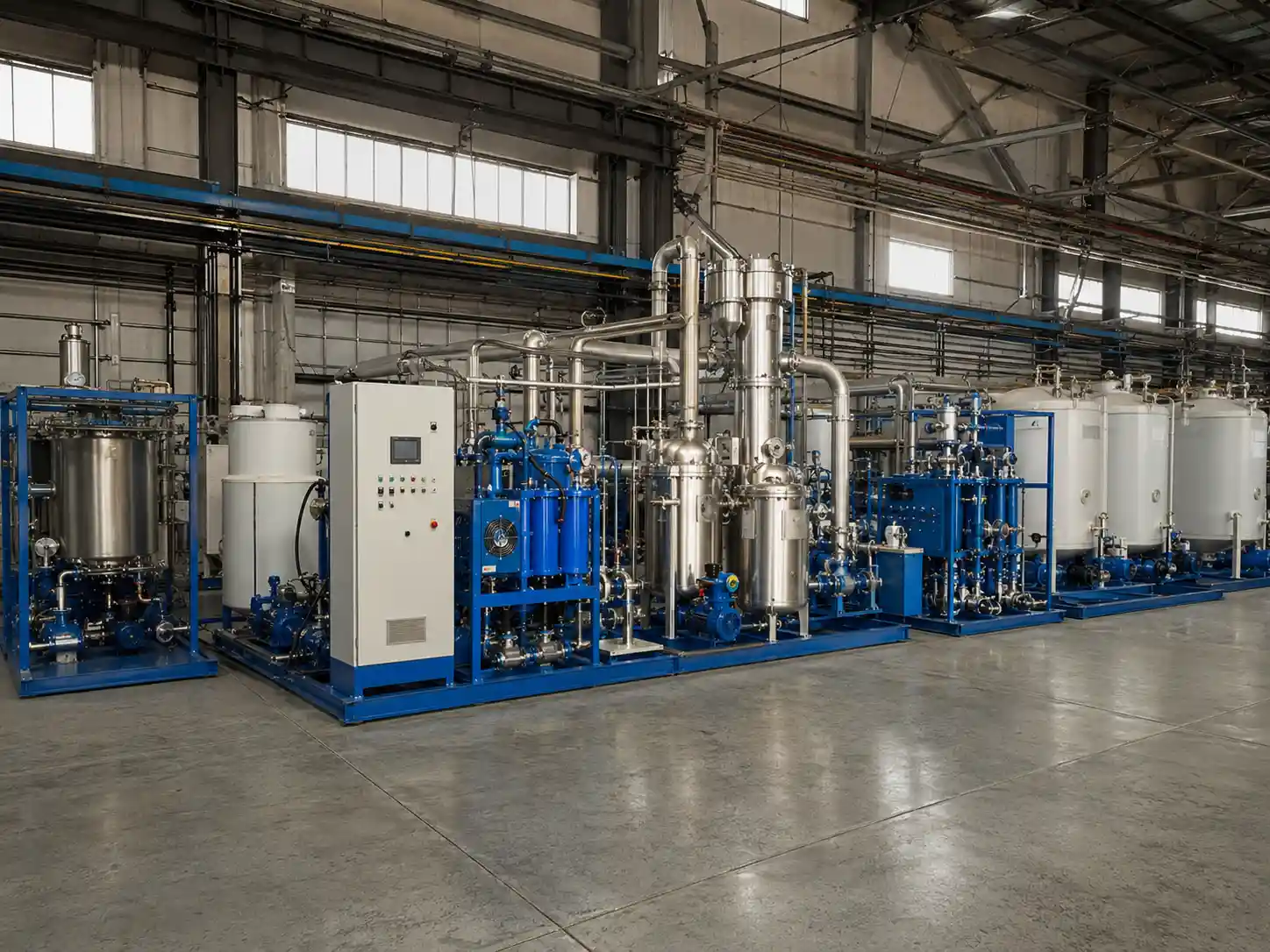
Chemical Dechlorination Equipment
-
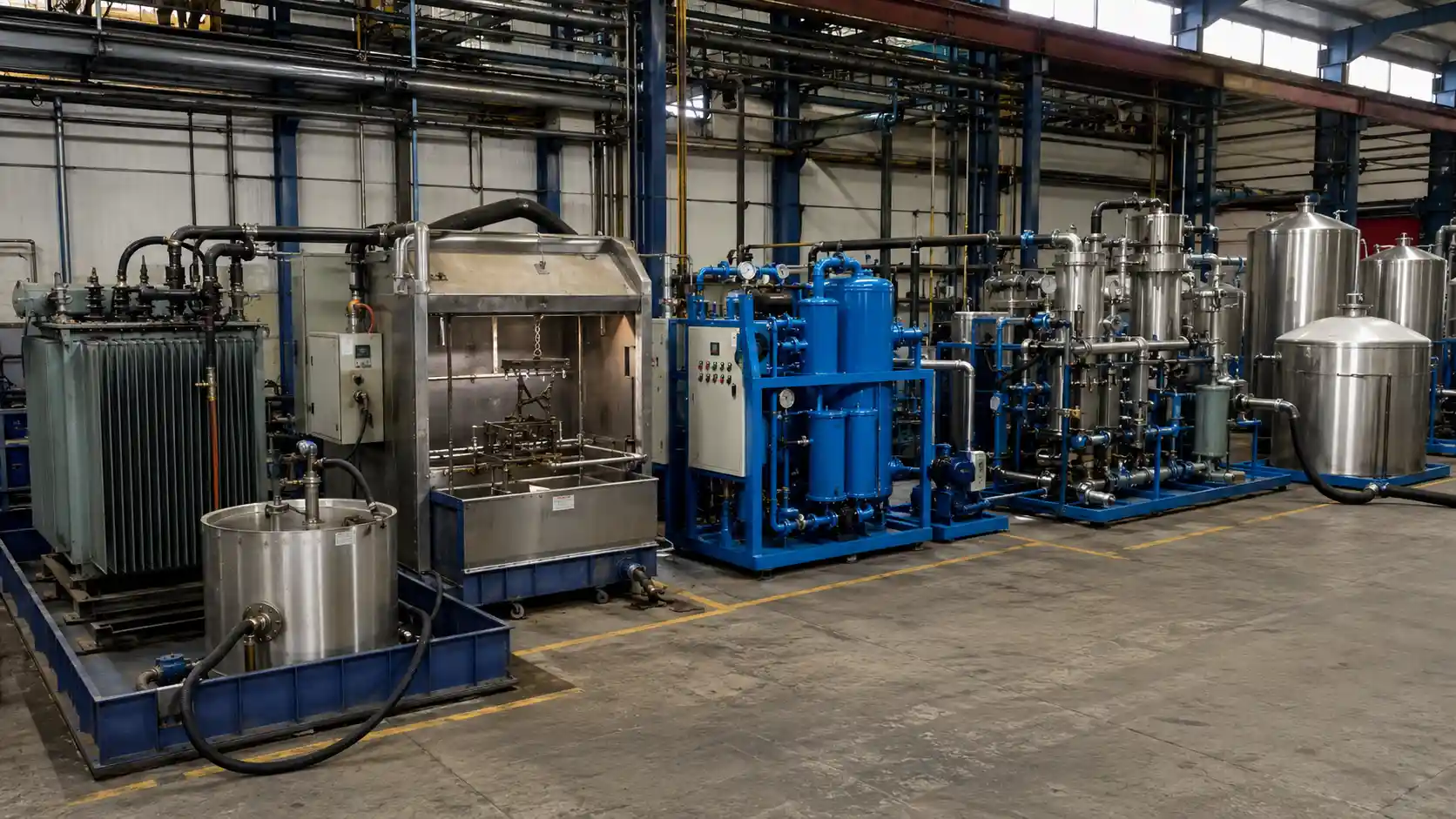
PCB Contaminated Oil treatment
-
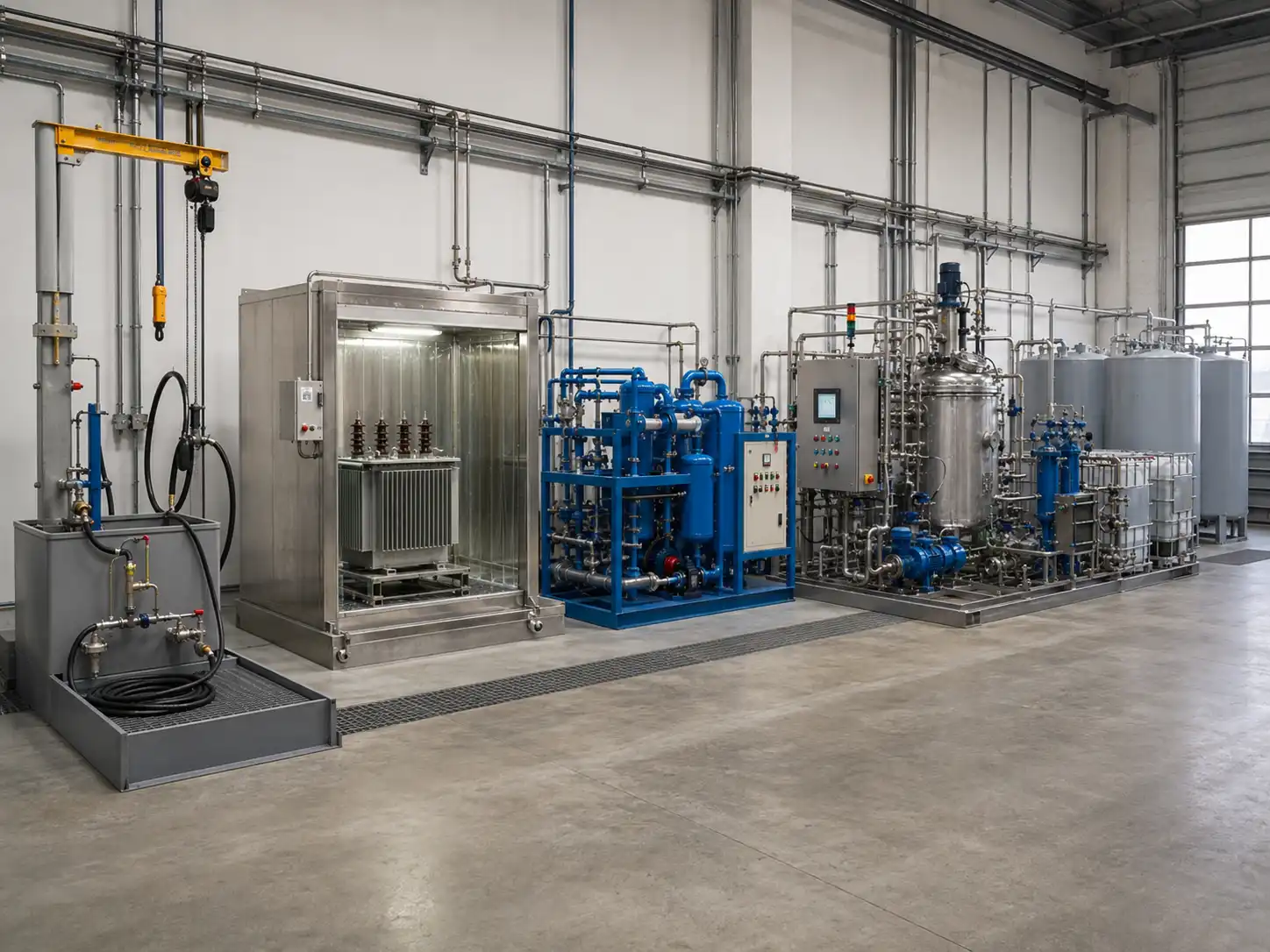
Transformer Oil Dechlorination
Industrial PCB Dechlorination Systems & Chemical Neutralization
Biowas designs and engineers heavy-duty PCB Dechlorination Systems. Built for non-destructive, closed-loop treatment of polychlorinated biphenyls (PCBs) in transformer insulating oils and toxic organic liquids, our systems chemically strip chlorine atoms from hazardous molecules. This transforms toxic PCBs into harmless salts and reconditionable base oil without thermal incineration or oil destruction.
BIOWAS PCB Treatment Solutions
Explore our specialized system configurations engineered for specific PCB concentration levels, oil flow rates, and site deployment requirements.
-
Transformer Oil PCB Removal System
Targeted chemical treatment plants engineered to strip chlorine ions from mineral insulating oils, safely reducing PCB contamination to under 2 ppm without degrading oil dielectric strength.
-
PCB Contaminated Oil Treatment Systems
Heavy-duty continuous oil reconditioning units designed to process high-volume, PCB-laden industrial fluids, incorporating degassing, dewatering, and chemical stripping stages.
-
PCB Chemical Dechlorination Systems
Advanced chemical reactor platforms utilizing proprietary alkali dispersion reagents to achieve complete molecular cleavage of toxic organochlorine compounds at moderate temperatures.
-
Mobile Transformer Oil Treatment System
Self-contained, trailer-mounted or containerized decontamination units built for live or offline on-site transformer servicing in remote substations and industrial facilities.
-
Transformer PCB Decontamination Systems
Closed-loop circulation systems designed for dynamic flushing, internal core washing, and in-situ decontamination of energized or de-energized electrical transformers.
-
Hazardous Liquid Neutralization Systems
Industrial chemical reaction systems engineered for the safe neutralization, dechlorination, and stabilization of toxic halogenated organic waste streams.
Industrial Applications & Treatment Scenarios
Engineered for Critical Power Utility & Hazardous Chemical Management
Biowas PCB Dechlorination Systems deliver safe, environmentally compliant chemical neutralization across high-voltage electrical, environmental remediation, and hazardous waste sectors:
-
Power Utilities & Electricity Grid Operators
In-situ or off-site dechlorination of PCB-contaminated mineral transformer oils, extending the operational life of high-voltage transformers and electrical assets.
-
Electrical Equipment Maintenance & Servicing
Decontamination and retrofilling of aged transformers, capacitors, and circuit breakers, enabling power service companies to meet global environmental compliance mandates.
-
Hazardous Chemical Waste Treatment Centers
Centralized chemical neutralization of bulk organochlorine waste, dielectric fluids, and contaminated industrial oils prior to final discharge or oil recycling.
-
Industrial Facility Remediation & Substation Upgrades
Mobile, rapid-deployment decontamination of legacy electrical infrastructure during plant decommissioning or brownfield site environmental cleanups.
Core Engineering & Technical Capabilities
Non-Destructive Chemical Dechlorination
Utilizes specialized liquid alkali reagents at mild operating temperatures (80℃–150℃) to selectively cleave carbon-chlorine bonds. PCBs are converted into harmless sodium chloride (salt) and polyphenyl compounds while preserving the original hydrocarbon structure of the transformer oil.
Integrated Oil Purification & Restoration
Equipped with multi-stage high-vacuum degassers, coalescing moisture separators, and precision particulate filters. The system simultaneously removes dissolved gases, water, and reaction byproducts, restoring dielectric breakdown voltage (≥ 70 kV) and tan delta values.
Closed-Loop Zero-Emission Operation
Designed as a totally enclosed, negative-pressure reaction process with nitrogen blanketing and off-gas scrubbers. Prevents volatile vapor releases, eliminates dioxin and furan formation risks, and guarantees zero hazardous emissions during operation.
Precision Process Automation & Safety Interlocks
Controlled by integrated Siemens PLC systems with continuous inline sensors tracking PCB removal reaction rates, temperature, vacuum level, moisture content, and flow rates with automated emergency shutdown protections.
Common Sources of PCB Contamination Treated
BIOWAS PCB decontamination equipment is engineered to process high-risk organochlorine waste streams across the power and environmental remediation sectors:
| Contamination Source | Typical Waste Stream Examples | Primary Treatment Objective |
| Electrical Transformer Oil | PCB-contaminated mineral insulating oil in aged transformers | Chemical dechlorination to < 2 ppm and dielectric reconditioning |
| Electrical Capacitors & Breakers | Concentrated dielectric fluids, retrofilled equipment washings | Complete molecular cleavage of organochlorine compounds |
| Industrial Machinery Oils | Legacy heat transfer fluids, hydraulic fluids, synthetic lubricants | Decontamination and oil recycling to base oil standards |
| Contaminated Environmental Liquids | Brownfield runoff liquids, contaminated sump fluids | Chemical neutralization and environmental stabilization |
How Does PCB Dechlorination Work?
Understanding the multi-stage chemical reaction and oil reconditioning process ensures operational safety and regulatory compliance.
-
Step 1: Oil Feeding & Fine Filtration: PCB-contaminated oil is introduced into the system, passing through primary particulate filters to remove mechanical impurities.
-
Step 2: Thermal Conditioning: The oil is gently preheated under vacuum to 80℃–150℃, establishing optimal kinetic parameters for chemical reaction without cracking the hydrocarbon base.
-
Step 3: Chemical Dechlorination Reaction: Dispersion reagents are injected into the reaction chamber, stripping chlorine atoms from PCB molecules and forming inert, easily filterable salts.
-
Step 4: Vacuum Degassing & Moisture Removal: Hot oil enters a multi-stage high-vacuum degasser where dissolved gases, moisture, and volatile reaction byproducts are flash-evaporated and scrubbed.
-
Step 5: Clean Oil Output & Testing: Purified oil passes through fine polishing filters, achieving PCB concentrations under 2 ppm and restoring dielectric breakdown voltage above 70 kV for safe reuse.
PCB Treatment Methods Comparison
Comparing available PCB destruction technologies helps clarify the operational and financial advantages of chemical dechlorination:
| Treatment Method | Oil Preservation | Emission Profile | Process Footprint | Best Operational Application |
| Chemical Dechlorination (BIOWAS) | Excellent (Oil fully restored & reused) | Zero combustion emissions; enclosed process | Compact, skid-mounted or mobile unit | Low-to-medium PCB transformer oil treatment |
| High-Temperature Incineration | None (Total oil combustion & destruction) | Requires extensive flue gas scrubbing | Large-scale stationary plant | Bulk high-concentration pure PCB fluids |
| Thermal Desorption | Partial (Requires re-refining) | Requires vapor condensation & scrubbing | Medium-to-large modular system | PCB-contaminated soils and solid substrates |
| Landfill & Encapsulation | None (Long-term liability) | Potential groundwater leaching risks | External containment site | Emergency containment only (Not recommended) |
Technical Services & After-Sales Support
Full-Lifecycle Engineering & Field Support
Biowas provides end-to-end technical support across all our Turnkey Waste Disposal Systems to ensure uninterrupted environmental compliance and safe operational execution.
Engineering Expertise & Laboratory Analysis
As an established Environmental Protection Equipment Manufacturer, our analytical laboratory conducts quantitative gas chromatography-electron capture detector (GC-ECD) testing to measure exact PCB congener profiles, moisture levels, and dielectric strength before system sizing.
Field Assembly & Substation Commissioning
Senior electrical and chemical engineers supervise site positioning, transformer piping connection, nitrogen purging, vacuum testing, and initial chemical reagent dosing.
Operator Training & Chemical Safety Protocol
Comprehensive hands-on training for utility technicians covering closed-loop PLC operation, reagent handling, inline oil testing, and emergency safety override procedures.
Reagents, Spares & Remote Assistance
Continuous supply of specialized dechlorination reagents, vacuum pump vanes, fine filter cartridges, and high-temp seals, supported by remote PLC diagnostic capabilities.
Frequently Asked Questions
1. What is PCB dechlorination used for?
PCB dechlorination is a chemical process used to strip chlorine atoms from toxic polychlorinated biphenyl (PCB) molecules. It converts hazardous PCB-contaminated liquids, such as mineral transformer oil, into non-toxic salts and reusable base oil without burning or destroying the oil.
2. Can BIOWAS PCB treatment systems process transformer oil on-site?
Yes. BIOWAS manufactures mobile, containerized, and trailer-mounted PCB treatment systems specifically designed for on-site substation servicing. The system can connect directly to transformers to decontaminate oil in a continuous closed loop.
3. How do I choose the right PCB waste treatment system?
Selection depends on your initial PCB concentration level (ppm), total oil volume or processing flow rate (L/h), target output PCB limit (< 2 ppm or non-detectable), and deployment requirements (fixed plant vs. mobile substation unit). BIOWAS engineers evaluate sample test data to recommend exact system dimensions.
4. Does BIOWAS provide customized PCB treatment equipment?
Yes. BIOWAS custom-engineers reaction vessel volumes, chemical dosing modules, high-vacuum degassers, and automated Siemens PLC control systems to match specific project and regulatory standards.