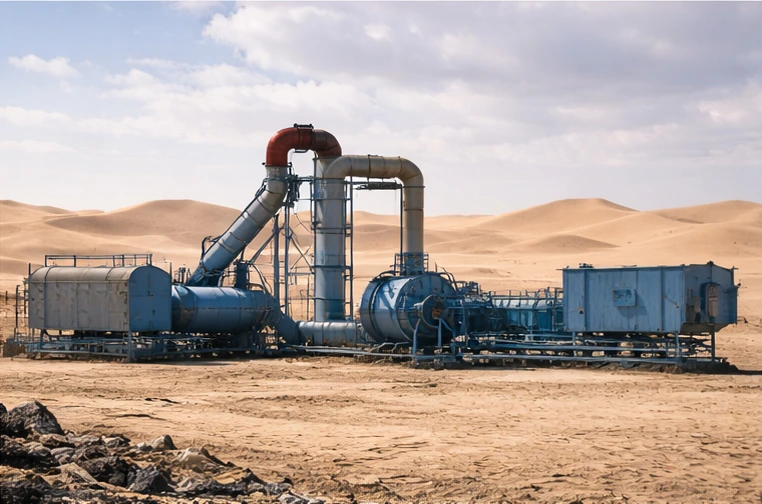
Sludge Oil Thermal Treatment Unit
Products Details
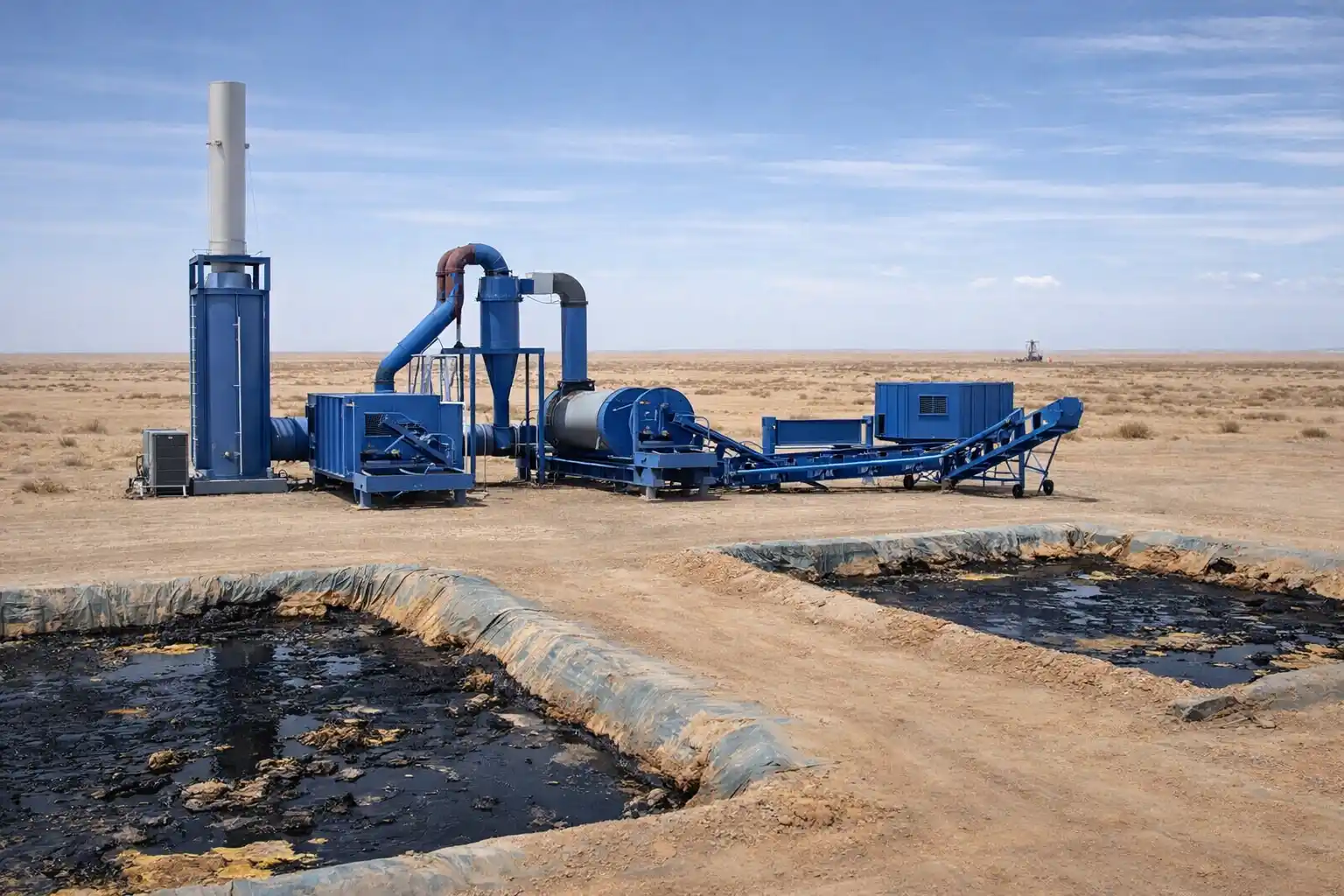
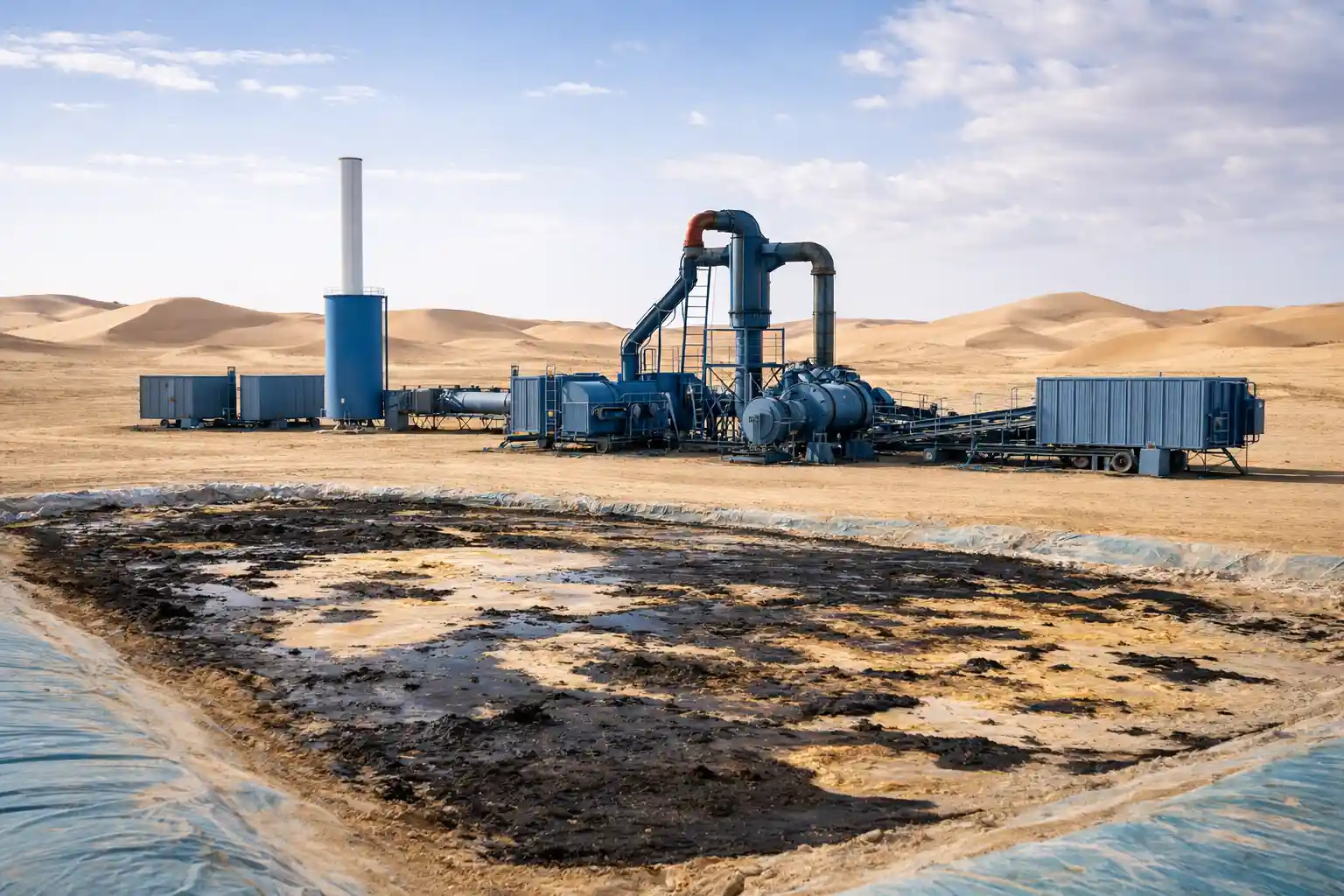
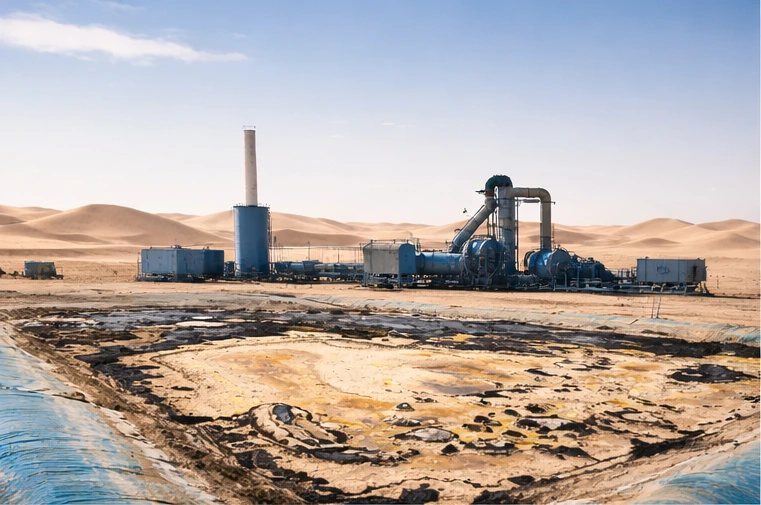
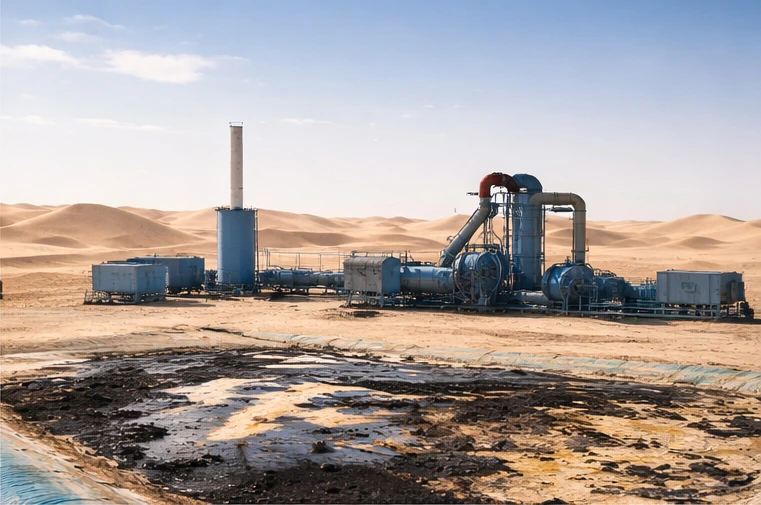
Sludge Oil Thermal Treatment Unit is designed for the treatment, remediation, stabilization, or final destruction of oily and hydrocarbon-contaminated waste streams generated by oil fields, refineries, tank farms, petrochemical sites, maintenance bases, spill-response projects, and contaminated soil remediation operations. In these environments, the waste is usually heterogeneous and difficult to manage. It may include oily sludge, hydrocarbon-contaminated soil, sticky residues, semi-solid waste, volatile organic compounds, odorous gases, and liquid chemical cleaning residues. For this reason, the system is built as a robust industrial solution capable of handling variable feed conditions while maintaining stable thermal treatment and controlled atmospheric emissions.
The treatment concept is based on a rotary primary processing unit followed by a high-temperature oxidation stage and a multi-step gas-cleaning line. This general configuration is fully consistent with the rotary treatment logic already present in your industrial systems, where a rotary chamber is used for the main thermal stage and a second thermal section is used for post-treatment of gases before air-pollution-control equipment.
In practical terms, the feed enters the rotary drum / rotary kiln primary unit, where it is heated and continuously agitated. This rotary movement is a major advantage because it improves contact between the material and heat, supports progressive drying and thermal decomposition, and helps treat mixed residues more uniformly than static systems. For oily sludge and contaminated soil projects, this is especially important because moisture, stickiness, particle size, hydrocarbon loading, and odor intensity can vary significantly from one batch to another. The rotary section therefore acts as the heart of the plant, ensuring continuous exposure of the material to the treatment process while reducing untreated zones inside the feed mass.
After the primary stage, the system directs the resulting gases and volatile compounds to a thermal oxidation unit. This section is used to oxidize odorous and combustible gases at high temperature, transforming harmful hydrocarbons and volatile organic compounds into more manageable combustion products before final gas cleaning. This high-temperature oxidation principle matches the logic of your rotary combustion platforms, where a second chamber is used for post-combustion and cleaner downstream gas treatment.
To control emissions, the unit is arranged with a multi-stage air pollution control train. This line includes:
- a cyclonic dust separator for coarse particles,
- a bag filter / baghouse for fine particulate control,
- a cooling or quench section to rapidly reduce gas temperature,
- an air purification / scrubbing unit for gas neutralization and odor reduction,
- and, where required, an activated carbon stage for additional capture of persistent organic pollutants, odors, and trace contaminants.
This combination gives the Sludge Oil Thermal Treatment Unit an important commercial advantage: it is a complete treatment plant integrating solids handling, thermal processing, oxidation, gas cooling, particulate filtration, and air-cleaning functions in one coherent industrial system. It is therefore suitable not only for disposal projects, but also for remediation-oriented operations where the objective is to reduce hydrocarbon contamination, improve material condition, control odors, and meet environmental handling requirements before discharge, reuse, or final disposal.
Another strong advantage of this unit is its scalability. With capacities ranging from 5 T/h to 20 T/h, it is suitable for medium and large remediation projects, centralized sludge-treatment plants, refinery waste programs, and long-duration environmental cleanup operations. The installation can also be adapted to project-specific site conditions, including feed preparation areas, cooling-water tanks, dust-control sections, emission-control modules, solids discharge equipment, and a dedicated control room. This makes the system highly relevant for industrial customers seeking a serious, site-based treatment solution rather than a small batch machine.
Product Drawing
| Designation | Characteristics |
| Reference | Sludge Oil Thermal Treatment Unit |
| Type | Rotary thermal treatment plant |
| Application | Oily sludge, contaminated soil, hydrocarbon residues, tank-bottom sludge, odorous hydrocarbon waste, selected organic residues |
| Available Capacity Range | 5 T/h to 20 T/h |
| Treatment Principle | Rotary primary thermal processing + thermal oxidation + multi-stage gas treatment |
| Feed Forms | Wet solids, oily sludge, semi-solid residues, contaminated soil, liquid-contaminated solids |
| Primary Treatment Section | Rotary drum / rotary kiln for continuous agitation, heating, and primary treatment |
| Gas Treatment Principle | High-temperature oxidation followed by cooling, dust separation, and air purification |
| Dust Removal Stage 1 | Cyclonic dust separator / spiral dust removal unit |
| Dust Removal Stage 2 | Baghouse / bag filter for fine particulate capture |
| Gas Cooling | Cooling or quench section with cooling-water support |
| Air Purification | Scrubber / air-cleaning section for odor and pollutant reduction |
| Optional Polishing Stage | Activated carbon filtration for VOCs, odors, and trace contaminants |
| Odor Control | Yes, integrated into the thermal oxidation and gas-cleaning process |
| Control System | Centralized control cabinet with site control room |
| Plant Layout | Modular industrial layout with solids handling, treatment line, gas cleaning, and stack |
| Project Positioning | Remediation, decontamination, stabilization, or final thermal destruction depending on waste profile |
| Industrial Sectors | Oil & gas, refineries, petrochemicals, storage terminals, contaminated-site remediation, industrial cleanup projects |
How does the Sludge Oil Thermal Treatment Unit work?
The Sludge Oil Thermal Treatment Unit works through a continuous staged process. First, oily sludge, contaminated soil, or hydrocarbon-bearing residues are introduced into the rotary primary treatment unit. Inside this rotating section, the feed is heated and continuously moved, which helps break down the material, release moisture, reduce stickiness, and separate volatile hydrocarbons from the solid phase. Rotary motion is essential here because it improves heat transfer and provides more uniform treatment across difficult and heterogeneous material streams. This same rotary treatment philosophy is already used across your rotary thermal platforms.
The gases and vapors generated during this stage are then directed to the thermal oxidation unit, where odorous and combustible compounds are exposed to high-temperature oxidation. This stage reduces the concentration of harmful hydrocarbon vapors and improves the quality of the gas stream before it enters the pollution-control section.
After oxidation, the fumes pass through a sequence of treatment stages that includes cyclonic separation, bag filtration, cooling / quenching, and air purification. In your current rotary product logic, cyclone separation, heat exchange, activated carbon, bag filtration, and wet scrubbing principles are already part of the wider emission-treatment philosophy, which makes them a strong technical base for this page as well.
The final result is a complete industrial process that treats both the solid phase and the gas phase: solids are thermally processed and stabilized, while vapors and dust are oxidized, cooled, filtered, and purified before atmospheric discharge.
Application and Case
Sludge Oil Thermal Treatment Unit is suitable for:
- Oil-contaminated soil treatment projects
- Oily sludge treatment plants
- Refinery and petrochemical residues
- Tank-bottom sludge treatment
- Spill cleanup and remediation operations
- Oil field waste management centers
- Hydrocarbon-contaminated solids and semi-solids
- Odorous and volatile organic waste streams
- Industrial decontamination and environmental rehabilitation projects
This unit is especially suitable for operators who need a high-capacity sludge oil treatment system capable of handling complex oily waste streams under real industrial conditions. Its rotary process design, thermal oxidation stage, and integrated gas-cleaning system make it a strong solution for projects where simple separation methods are not enough and where thermal treatment must be combined with serious emission control. It is also well suited for long-duration remediation contracts, refinery cleanup programs, and centralized waste-treatment installations that require stable throughput, strong odor control, and scalable plant capacity from 5 T/h to 20 T/h.