
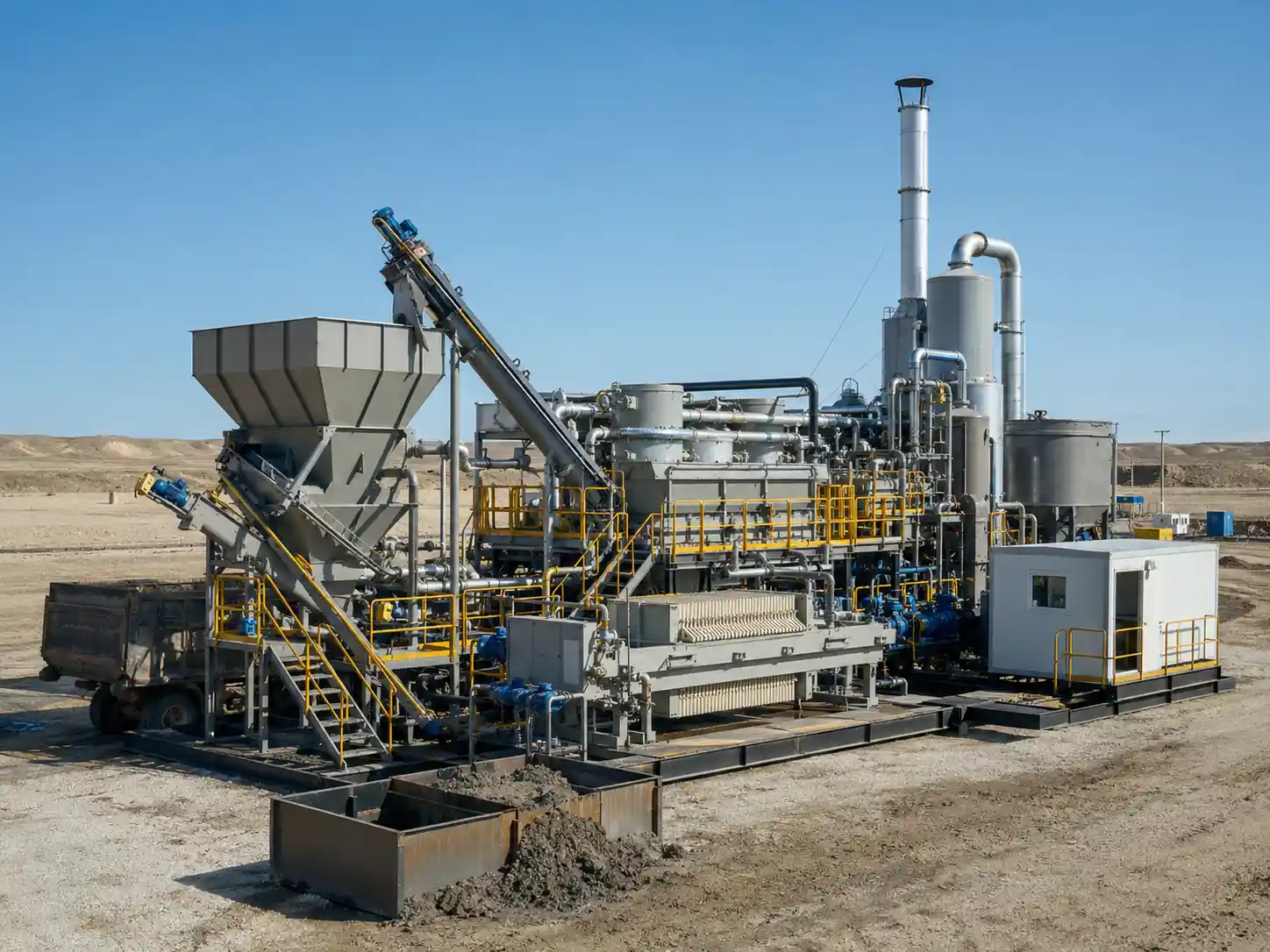
Drilling Waste Management System
Products Details
Drilling Waste Management System is designed for the management of waste generated during drilling activities in the oil and gas sector. These waste streams may include drilling cuttings, used drilling mud, oily residues, pit waste, contaminated solids, and liquid-rich slurries that are difficult to handle in raw form. The purpose of the system is to reduce waste volume, improve handling, and convert the drilling waste into more manageable fractions under controlled industrial conditions.
A standard drilling waste treatment system works through a combination of screening, conditioning, separation, dewatering, and solids handling. The incoming waste is first received and prepared for treatment. Depending on the nature of the material, the system may use feed control, agitation, and conditioning to improve process stability and prepare the waste for separation.
Once prepared, the waste passes through stages that divide the material into its main fractions. The solid fraction is separated and discharged for further drying, stabilization, transport, or disposal. The liquid fraction is routed for additional treatment, reuse, or controlled discharge depending on site requirements. This makes a complete drilling waste management program valuable for both environmental management and improved drilling-site housekeeping.
A standard installation may include feed hoppers, conveyors, vibrating screens, tanks, conditioning units, dewatering modules, solids discharge equipment, transfer pumps, storage tanks, and centralized automation. With typical capacities from 1 T/h to 20 T/h, these systems are suitable for both continuous drilling operations and project-based waste treatment programs.
Because drilling waste varies according to geology, drilling fluid type, moisture level, and contamination profile, systems integrated into Drilling Waste Management System are normally designed to be flexible and modular. They provide a practical industrial solution for operators who need reliable waste reduction, better handling of drilling residues, and more controlled management of solid and liquid waste streams.
Product Drawing
| Designation | Characteristics |
| Reference | Drilling Waste Treatment |
| Application | Drilling cuttings, drilling mud, oily drilling waste, pit waste, hydrocarbon-contaminated solids |
| Capacity | 1 T/h – 20 T/h typical industrial range |
| Working Type | Integrated drilling waste conditioning and separation system |
| Treatment Principle | Screening, conditioning, separation, dewatering, and handling of solids and liquids |
| Typical Moisture Content in Feed | 10–50% |
| Typical Oil Content in Feed | 1–20% |
| Typical Solids Content in Feed | 50–90% |
| Feed Form | Cuttings, slurry, semi-solid residues, used drilling mud, contaminated solids |
| Main Process Stages | Feed reception, screening, conditioning, separation, dewatering, liquid handling, solids discharge |
| Typical Volume Reduction | 20–70% depending on waste composition and treatment target |
| Operating Mode | Batch, semi-continuous, or continuous depending on plant design |
| Liquid Separation | Yes |
| Solids Handling | Yes |
| Dewatering Function | Yes |
| Control System | Centralized PLC or industrial control cabinet |
| Installation Type | Fixed plant, skid-mounted unit, or mobile package |
| Main Advantages | Reduced waste volume, improved solids handling, better liquid management, adaptable field design |
| Industrial Sectors | Oil & gas drilling, onshore drilling sites, offshore support bases, drilling waste service operations |
How does Drilling Waste Management System work?
Drilling Waste Treatment works by first receiving the waste into a controlled treatment line where the material is screened and conditioned to improve separation. This first stage helps regulate feed consistency, remove oversized material when necessary, and prepare the waste for the main treatment steps.
After conditioning, the waste moves through separation and dewatering stages where the solid fraction is divided from the liquid fraction. The separated solids are discharged for further handling or disposal, while the liquid phase is transferred to storage, reuse, or downstream treatment depending on project requirements.
The final result is a controlled industrial process that reduces waste volume, improves management of drilling residues, and makes both solids and liquids easier to handle under field or plant operating conditions.
Application and Case
Drilling Waste Treatment is suitable for:
- Onshore drilling waste treatment
- Offshore drilling support waste management
- Drilling cuttings treatment
- Used drilling mud treatment
- Pit waste treatment
- Hydrocarbon-contaminated drilling residues
- Oilfield waste-management operations
- Drilling-site cleanup and waste reduction projects
Implementing a Drilling Waste Management System is especially suitable for operators who need a reliable industrial solution for handling drilling residues under controlled conditions. Pairing this with a high-capacity Thermal Desorption System makes it a strong choice for projects that require waste volume reduction, improved solids handling, liquid separation, and more efficient management of drilling waste streams.