
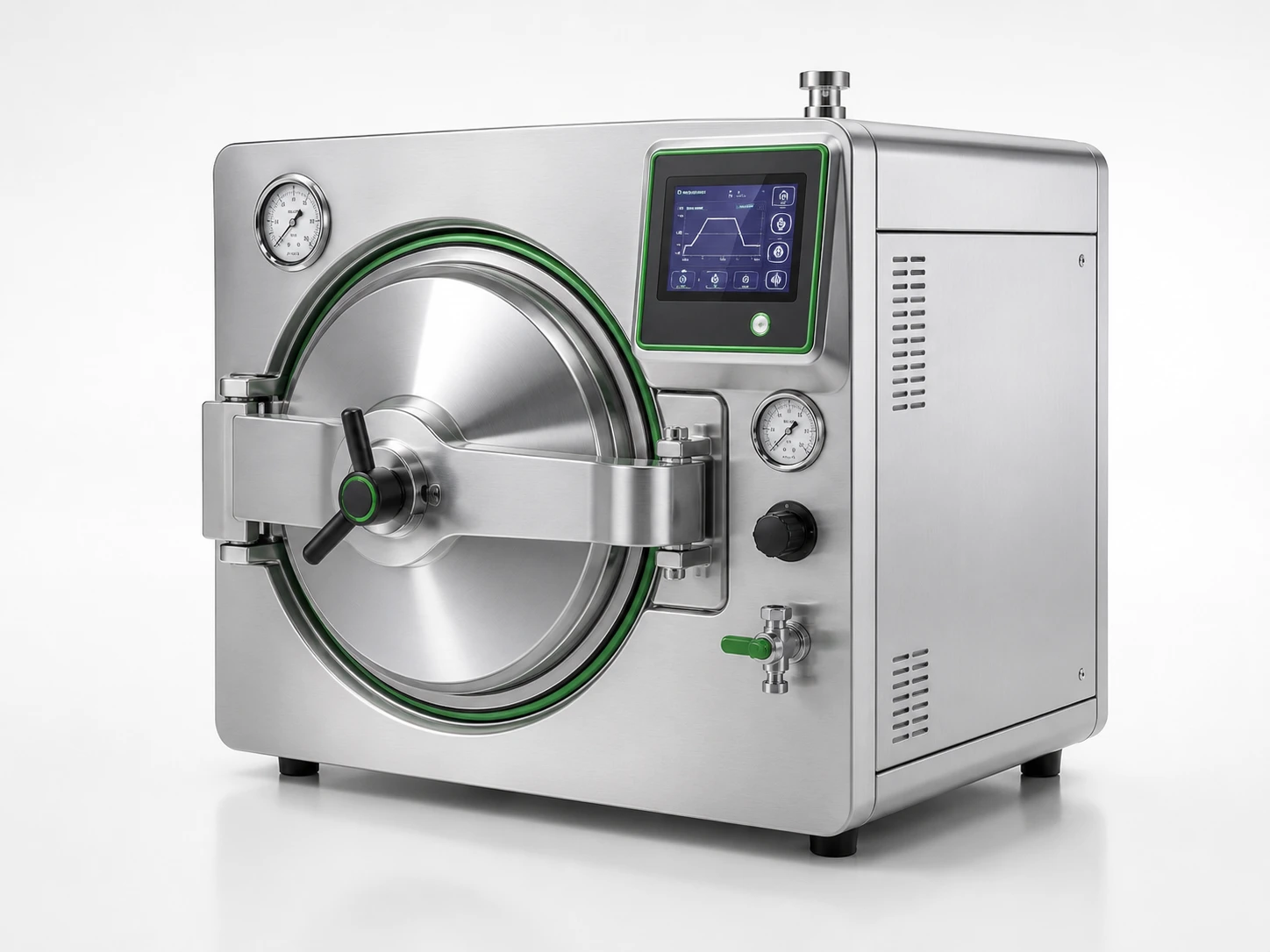
Laboratory Microbiology Autoclaves
Products Details
Laboratory Microbiology Autoclaves are designed for the safe and efficient sterilization of contaminated laboratory materials before reuse, discharge, or final disposal. They are suitable for research laboratories, microbiology laboratories, quality-control laboratories, pharmaceutical laboratories, university laboratories, medical analysis centers, and other controlled environments where biosafety and sterilization reliability are essential. Their main role is to eliminate biological contamination from laboratory-generated materials while helping operators maintain a safe, standardized, and regulation-oriented working process.
These systems operate through a high-vacuum, high-temperature, and high-pressure saturated steam process. The chamber creates a vacuum environment and then injects steam to achieve deep penetration through the load. Under standard operating conditions of 134°C and 2.2 bar, the process is designed to achieve strong microbial destruction and dependable sterilization performance. This makes laboratory autoclave solutions a practical choice for applications where contaminated tools, vessels, test residues, and infectious laboratory waste must be rendered safe before further handling.
A major advantage of Laboratory Autoclaves is process control. In laboratory environments, the treated load is often sensitive, varied, or operationally important. For that reason, the equipment is designed to provide stable sterilization parameters, controlled cycle operation, and reliable repeatability. The vacuum-steam process improves heat transfer and allows more uniform sterilization inside the chamber, helping ensure that the entire load is exposed to the required conditions. This is particularly important in laboratories where biosafety, validation, and contamination control are critical.
Another important strength is flexibility. Laboratory autoclaves can be configured as standalone sterilization units or as part of a broader sterilization and waste-handling solution. Based on the same equipment philosophy used in the MAS and ICA systems, the installation can include the autoclave chamber, vacuum pump, PLC control cabinet with touch screen, loading accessories, and optional support systems such as steam generation, transfer devices, container handling accessories, and monitoring functions. This modular approach allows the solution to be adapted to different laboratory sizes, treatment frequencies, and operational constraints.
Compared with direct thermal destruction or chemical disinfection methods, Laboratory Autoclaves provide a cleaner and more controlled sterilization process. They do not depend on combustion and do not require hazardous chemical treatment during the sterilization stage. This makes them especially suitable for professional environments seeking a safer, cleaner, and more environmentally responsible sterilization method for laboratory operations. Their controlled design, repeatable performance, and flexible configuration make a microbiology autoclave a strong choice for facilities that need dependable sterilization as part of daily laboratory work.
Product Drawing
| Designation | Characteristics |
| Reference | Laboratory Microbiology Autoclaves |
| Application | Laboratories, research centers, microbiology labs, testing facilities, pharmaceutical labs, university labs |
| Capacity | Configurable according to laboratory requirements |
| Working Type | High-vacuum, high-pressure steam sterilization system |
| Working Temperature and Pressure | 134°C, 2.2 bar (adjustable) |
| Sterilization Principle | Saturated steam penetration under vacuum and pressure |
| Microbial Inactivation | High-level biological decontamination for laboratory biosafety |
| Treatment Process | Controlled sterilization cycle for contaminated laboratory materials and waste |
| System Form | Standalone unit or integrated sterilization solution |
| Control System | PLC control cabinet with touch screen and adjustable cycle parameters |
| Standard Configuration | Sterilization chamber, vacuum system, control cabinet, loading accessories |
| Optional Configuration | Steam generator / boiler, transfer accessories, container handling accessories, monitoring functions |
| Main Advantages | Reliable sterilization, controlled cycle operation, cleaner non-incineration process, modular design |
| Installation Use | Routine laboratory sterilization and biohazard material treatment |
How do Laboratory Autoclaves work?
Laboratory Autoclaves work by sterilizing contaminated materials with saturated steam under controlled temperature, pressure, and vacuum conditions. During the cycle, the chamber first creates a vacuum environment, then injects steam to ensure deep and uniform penetration into the load. This process destroys harmful microorganisms and helps make laboratory materials safe for reuse, discharge, handling, or final disposal. The same high-vacuum steam logic is already used in your MAS and ICA autoclave systems.
Because laboratory loads can vary from instruments and glassware to contaminated solid materials and biohazard waste, the sterilization cycle is designed to provide stable and repeatable process conditions. This improves sterilization quality, reduces contamination risk, and supports laboratory biosafety requirements. With adjustable control parameters and a modular equipment layout, laboratory autoclaves can be adapted to different operational needs while maintaining dependable sterilization performance.
Application and Case
Laboratory Autoclaves are suitable for:
- Microbiology laboratories
- Research laboratories
- University laboratories
- Pharmaceutical laboratories
- Medical analysis laboratories
- Testing and quality-control laboratories
- Biohazard material sterilization projects
- Laboratory waste treatment and decontamination operations
Laboratory Microbiology Autoclaves are especially suitable for facilities that require safe, repeatable, and professionally controlled sterilization of laboratory materials and waste. They provide a strong solution for environments where biosafety, contamination control, and process consistency are essential. With their high-vacuum steam process, modular configuration, and clean non-incineration operating principle, choosing a dedicated laboratory autoclave or integrated Industrial Autoclave Sterilizer is well suited for modern laboratory sterilization applications.