How Do Medical Waste Incinerators Work? A Buyer’s Guide for Hospitals and Treatment Facilities
September 1, 2026
Medical waste incinerators use controlled combustion to reduce infectious and pathological waste into gases and ash. A typical system feeds segregated medical waste into a primary chamber, where controlled burning starts the thermal treatment process. The hot gases then move into a secondary chamber, where additional air and heat support more complete combustion. After combustion, the gas passes through an emission control system before discharge through the stack. Ash remains for controlled collection and disposal.
Modern systems also use temperature monitoring, automatic controls, safety interlocks, and combustion air management. The exact design depends on waste composition, capacity, local regulations, and required emission limits. WHO notes that modern incinerators need high operating temperatures and suitable gas-cleaning equipment to control pollutants, including dioxins and furans.
Therefore, a medical waste incinerator is not simply a furnace. It is a complete thermal treatment system. The process combines combustion, gas residence time, air control, emission treatment, and residue management.
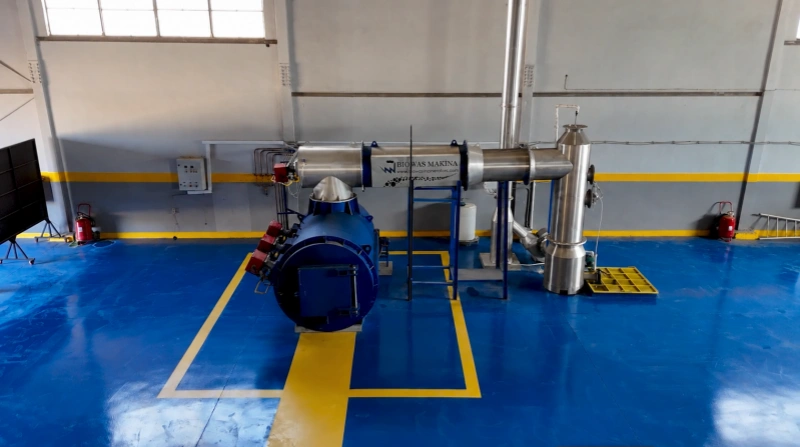
1. What Happens Inside a Medical Waste Incinerator?
The operating principle relies on controlled thermal decomposition and combustion. Medical waste can contain plastics, textiles, paper, organic tissue, sharps, packaging, and other combustible materials. These materials have different moisture levels and heating values. A properly designed system must manage these variations without losing combustion stability.
1.1 Waste Preparation and Loading
The process begins before the waste enters the combustion chamber. Hospitals and treatment facilities need a waste segregation system. This system separates infectious waste from general waste and excludes materials that the selected incinerator cannot safely process.
Operators normally place waste into containers or bags designed for the facility’s handling process. Depending on the equipment design, workers may load the waste manually, with carts, or through a mechanical feeding system.
Waste composition directly affects thermal performance. High moisture content can reduce the available heat for combustion. Large quantities of plastics can increase the heating value and change the gas composition.
Therefore, equipment selection should consider actual waste characteristics. Buyers should not rely only on nominal capacity.
1.2 Primary Chamber Combustion
After loading, the waste enters the primary combustion chamber. The chamber provides the main zone for waste drying, ignition, combustion, and burnout of solid residues.
The burner may provide heat during startup. It can also support combustion when the waste does not provide enough energy. Air enters the chamber in a controlled quantity.
Operators do not simply maximize airflow. Too little air can cause incomplete combustion and carbon monoxide. Excess air can lower chamber temperature and increase gas volume.
The primary chamber also needs enough space for the waste to remain under controlled thermal conditions. Internal geometry, refractory lining, burner position, grate design, and loading method all affect performance.
1.3 Secondary Chamber Combustion
Hot gases from the primary chamber move into the secondary chamber. This stage plays an important role in completing the combustion of gases and volatile compounds.
The secondary chamber receives additional combustion air. It maintains a controlled temperature and provides gas residence time. This gives combustible compounds enough opportunity to react with oxygen.
A well-designed secondary chamber helps reduce carbon monoxide and unburned organic compounds. However, temperature alone does not determine combustion quality.
Operators must also manage oxygen availability, residence time, gas mixing, and waste feed conditions.
WHO identifies approximately 850–1100 °C for modern healthcare waste incinerators with suitable gas-cleaning systems. Actual operating requirements must follow the equipment design and local environmental permit.
1.4 Heat Recovery and Flue Gas Treatment
After secondary combustion, the flue gas still contains pollutants and fine particles. The treatment train depends on the waste type, combustion system, and local emission requirements.
A system may include gas cooling, a cyclone, scrubber, bag filter, activated carbon injection, or other equipment. The exact combination should come from an emissions assessment and regulatory review.
This stage is critical because combustion does not automatically make flue gas clean.
EPA regulations for hospital, medical, and infectious waste incinerators address pollutants. These include particulate matter, carbon monoxide, hydrogen chloride, sulfur dioxide, nitrogen oxides, mercury, lead, cadmium, and dioxins and furans.
1.5 Ash Collection
Incineration leaves a solid residue. The amount depends on waste composition and combustion conditions.
Operators should allow ash to cool before handling it. They should also use procedures that limit unnecessary dust generation.
Ash classification and disposal requirements vary by jurisdiction and waste type. A complete medical waste treatment project therefore needs an ash management plan.
The incinerator reduces waste volume. It does not eliminate the need for final residue management.
2. Why Do Hospitals Use Incineration for Certain Medical Waste?
Incineration can help facilities treat waste that requires thermal destruction. Pathological waste and certain infectious materials may require treatment methods that address biological hazards and physical residues.
2.1 Pathological and Infectious Waste
Healthcare facilities can generate anatomical waste, contaminated dressings, disposable medical materials, laboratory waste, and potentially infectious materials.
The exact classification depends on local regulations. Thermal treatment can destroy combustible organic material and reduce the biological risks associated with the waste.
A hospital incinerator can also reduce the physical volume of treated material. However, incineration should not replace waste segregation.
WHO reports that about 85% of healthcare waste is general, non-hazardous waste. The remaining 15% is considered hazardous.
Treating every waste stream as infectious can increase operating costs. It can also increase fuel use and emissions.
2.2 Why Waste Segregation Matters
Waste segregation affects safety and operating economics. A facility can reduce unnecessary treatment loads by separating general waste from infectious and pathological waste.
Some materials also require special handling. Radioactive waste, certain chemicals, pressurized containers, and materials containing heavy metals may need separate management.
Operators should follow local regulations and the equipment manufacturer’s accepted waste specification.
A practical segregation program should define:
| Waste stream | Typical treatment consideration | Key decision |
|---|---|---|
| General healthcare waste | Often handled through normal solid waste systems | Keep outside thermal treatment when permitted |
| Infectious waste | May be suitable for thermal treatment | Confirm local classification and equipment design |
| Pathological waste | May require high-temperature treatment | Confirm regulatory requirements |
| Sharps | May require specialized handling | Prevent loading and unloading injuries |
| Pharmaceutical waste | Treatment depends on chemical composition | Review regulatory restrictions |
| Radioactive waste | Requires dedicated controls | Do not mix with routine medical waste |
Table 1. Typical medical waste streams and treatment considerations.
The table provides a planning framework rather than a universal waste acceptance list. Every project should use its local waste classification and permit conditions.
2.3 When Incineration May Not Be the Best Option
Incineration is not the only technology for healthcare waste. Autoclaving, steam treatment, microwaving, and other technologies can treat certain infectious waste streams.
WHO recommends considering alternatives where sufficient resources exist to operate and maintain them. Technology selection should consider waste type, infrastructure, energy availability, emissions requirements, capital cost, and operating capability.
For a hospital, the right technology should fit the actual waste stream and regulatory framework. A larger furnace does not automatically provide a better treatment solution.
3. What Equipment Does a Hospital Incinerator Need?
A medical waste incineration project usually includes more than the combustion chamber. Decision-makers should evaluate the complete process line.
3.1 Combustion Chamber and Refractory Lining
The primary and secondary chambers need refractory materials designed for high-temperature operation.
The lining protects the steel shell and helps maintain stable thermal conditions. Its specification should match operating temperature, waste characteristics, burner arrangement, and maintenance requirements.
Poor refractory selection can increase heat loss. It can also shorten service life and increase maintenance frequency.
3.2 Burners and Fuel System
Burners provide startup heat and can support combustion during low-load conditions. Fuel may include diesel, natural gas, LPG, or another approved source.
The burner system should integrate with temperature control logic. Automatic burner modulation can help maintain target conditions without unnecessary fuel consumption.
Fuel consumption depends on several variables. These include waste moisture, heating value, feed rate, chamber temperature, startup frequency, insulation quality, and combustion control.
Therefore, suppliers should not estimate fuel consumption from capacity alone.
3.3 Combustion Air System
Fans supply primary and secondary air. Independent air control can improve combustion stability and gas mixing.
The control system should monitor operating conditions. It can then adjust air supply according to the selected process strategy.
Stable airflow also helps reduce sudden temperature changes. This becomes important when waste composition changes during operation.
3.4 Flue Gas Treatment System
The gas treatment section can include several components. The configuration should reflect target pollutants and local emission requirements.
Common equipment includes:
- Gas cooling or quenching equipment
- Cyclone or particulate separation equipment
- Wet or dry scrubbers
- Bag filters
- Activated carbon systems
- Induced draft fans
- Chimney or stack systems
- Emission monitoring equipment
Not every project needs every component. The correct design should come from waste characterization, emission calculations, local standards, and permitting requirements.
3.5 Control and Safety System
Modern systems rely on sensors and automatic controls. Typical monitoring points include chamber temperatures, pressure, airflow, burner status, and other operating parameters.
Safety interlocks can prevent unsafe loading or burner operation. Alarm systems can notify operators when operating conditions move outside defined limits.
The control philosophy should cover startup, normal operation, shutdown, emergency conditions, and maintenance access.
For buyers reviewing a biomedical waste incinerator, the complete equipment configuration should be evaluated rather than the combustion chamber alone.
4. How Should Buyers Evaluate a Medical Waste Incinerator?
A buyer should evaluate the complete treatment process rather than comparing furnace capacity alone.
A 100 kg/h unit from one supplier may not have the same configuration as another 100 kg/h unit. Differences can involve chamber design, burners, controls, gas treatment, automation, and operating assumptions.
4.1 Start With the Waste Profile
The first technical input should be the waste profile. Buyers should identify daily quantity, peak quantity, moisture content, composition, packaging, and seasonal changes.
For example, a hospital may generate 500 kg of mixed healthcare waste per day. That does not mean it needs a 500 kg/h incinerator.
The facility may operate the equipment for several hours each day. A centralized treatment plant may instead require continuous operation and higher availability.
4.2 Define the Required Capacity
Capacity should reflect real operating conditions.
Important parameters include:
- Average waste generation
- Peak waste generation
- Operating hours per day
- Number of operating days
- Planned maintenance
- Future capacity requirements
- Waste heating value
- Moisture content
A centralized treatment facility may prioritize continuous throughput. A smaller hospital may prioritize flexible batch operation.
4.3 Review Emission Control Requirements
Emission compliance can influence equipment configuration more than furnace size.
Buyers should identify applicable national, regional, and local requirements before selecting the gas treatment system.
EPA’s HMIWI framework addresses nine pollutants under Section 129 of the Clean Air Act. Other countries use different standards and permit structures.
This makes the emissions specification a core project requirement. It should not be treated as an optional accessory.
4.4 Compare Total Project Cost
A buyer should evaluate capital cost and operating cost together. A low equipment price can become expensive if the system consumes excessive fuel or requires frequent maintenance.
The total project cost may include:
| Cost category | What to review |
|---|---|
| Incinerator equipment | Chamber, burners, refractory, controls |
| Gas treatment | Scrubber, filter, carbon injection, fan, stack |
| Installation | Foundation, electrical work, ducting, fuel system |
| Utilities | Fuel, electricity, water, compressed air if required |
| Labor | Operators, maintenance staff, training |
| Maintenance | Refractory, burners, filters, seals, pumps |
| Residue management | Ash cooling, storage, testing, disposal |
| Compliance | Testing, monitoring, permits, inspections |
Table 2. Main cost categories for a medical waste incineration project.
The phrase “biomedical waste incinerator price” can therefore be misleading when used as a single equipment number.
Buyers should request a project-based quotation. The quotation should separate the incinerator, emission control system, auxiliary equipment, installation scope, and operating assumptions.
4.5 Confirm After-Sales Support
A thermal treatment system needs routine inspection and maintenance. Buyers should ask about spare parts, refractory replacement, burner servicing, control system support, operator training, and commissioning.
The supplier should also provide operating instructions. Waste acceptance criteria should form part of the technical documentation.
These documents help the facility maintain safe and stable operation after commissioning.
5. How Does the Incineration Process Work in a Real Hospital Project?
Consider a medium-sized hospital that generates segregated infectious waste, pathological waste, contaminated PPE, dressings, packaging, and disposable medical materials.
The operator first separates general waste from the treatment stream. The selected waste then moves to the loading area.
After the incinerator reaches its required startup conditions, the operator loads waste according to the equipment procedure.
The primary chamber provides the initial combustion zone. Moisture evaporates first. Combustible materials then ignite and release gases.
Solid residues continue to burn as the batch moves through the chamber.
The hot gases then enter the secondary chamber. Additional air supports combustion of gases released from the primary chamber.
Temperature and residence time remain under control throughout this stage.
The flue gas then enters the treatment system. Depending on the project, the system can cool the gas and remove selected pollutants.
Particulate matter, acidic components, and other pollutants may require dedicated treatment stages.
Finally, treated gas exits through the stack. Ash moves to a controlled collection point.
The operator records key operating data and follows the facility’s residue handling procedure.
This example shows why a hospital incinerator should be viewed as a process system. The combustion chamber is only one part of the solution.
For larger centralized facilities, the same principle applies at a different scale. The system may add automated loading, continuous feeding, larger gas treatment equipment, redundant fans, advanced monitoring, and additional residue handling equipment.
6. What Should Buyers Know About Operation, Maintenance, and Compliance?
Good equipment performance depends on operation and maintenance. Even a well-designed incinerator can produce poor results if operators overload the chamber or ignore waste restrictions.
6.1 Monitor Key Operating Parameters
Temperature is one of the most important operating indicators. However, operators should not consider temperature alone.
They also need to monitor airflow, pressure, burner status, feed rate, and other parameters defined by the control system.
Sudden changes in waste composition can affect combustion. High-moisture waste can reduce temperature and increase fuel demand.
A high-plastic load can raise heating value and change gas characteristics.
6.2 Maintain the Refractory and Burners
Refractory inspection should form part of the planned maintenance schedule. Cracks, erosion, or local damage can increase heat loss.
Damage can also expose the steel shell to high temperatures.
Burners require regular inspection as well. Ignition components, fuel nozzles, flame detection devices, and control valves should follow the manufacturer’s maintenance intervals.
6.3 Maintain the Emission Control Equipment
Gas treatment equipment can accumulate dust, corrosion products, or chemical residues.
Filters, scrubbers, fans, pumps, ducts, and injection systems need regular inspection.
EPA guidance emphasizes proper operation and maintenance. Good O&M can reduce emissions, improve reliability, support ash burnout, and extend equipment life.
6.4 Treat Compliance as Part of the Design
Compliance should begin before equipment fabrication.
The project team should identify applicable standards, permit requirements, testing methods, and reporting obligations.
WHO warns that inadequate incineration or unsuitable waste can result in pollutant emissions and ash residues. It also notes the importance of appropriate gas cleaning for dioxins and furans.
Therefore, buyers should avoid selecting equipment from catalog capacity alone.
The complete system must match the waste, site, fuel, utilities, and regulatory framework.
Frequently Asked Questions
What is a medical waste incinerator?
A medical waste incinerator is a thermal treatment system designed to process specified healthcare waste through controlled combustion.
It normally includes combustion chambers, burners, air systems, controls, flue gas treatment, and ash handling equipment.
How does a hospital incinerator destroy medical waste?
The process uses controlled heat and combustion air.
The primary chamber treats solid waste. A secondary chamber burns combustible gases released during the first stage.
A gas treatment system then manages pollutants before discharge.
What temperature does a medical waste incinerator operate at?
Operating temperature varies by design and regulatory requirement.
WHO identifies approximately 850–1100 °C for modern medical waste incinerators with suitable gas-cleaning systems.
Project-specific temperatures should follow the equipment design and local permit conditions.
What waste can a medical waste incinerator treat?
The accepted waste depends on equipment design and local regulations.
Infectious and pathological waste may be suitable for thermal treatment. Radioactive waste and certain chemicals require separate management.
Buyers should obtain a written waste acceptance list from the supplier.
Is incineration suitable for all healthcare waste?
No.
A large share of healthcare waste is non-hazardous and may not require thermal treatment.
Alternative technologies can also treat certain infectious waste streams. WHO recommends evaluating technology choices according to local technical, financial, environmental, and operational conditions.
What affects biomedical waste incinerator price?
Capacity, chamber configuration, refractory materials, burners, fuel systems, automation, flue gas treatment, stack design, installation scope, and monitoring requirements can affect project cost.
Operating costs also depend on fuel, electricity, maintenance, and waste characteristics.
Does incineration eliminate all waste?
No.
Incineration reduces the volume of combustible waste. It still leaves ash and treated flue gas.
The facility therefore needs appropriate ash handling, disposal, and emissions management procedures.
Should a buyer choose capacity based only on daily waste volume?
No.
Buyers should consider peak waste generation, operating hours, moisture, heating value, waste composition, future growth, maintenance schedules, and required availability.
These factors can change the required hourly capacity.
References
- World Health Organization: Health-care Waste
- World Health Organization: Overview of Technologies for the Treatment of Infectious and Sharp Waste from Health Care Facilities
- U.S. Environmental Protection Agency: Medical Waste
- U.S. Environmental Protection Agency: Hospital, Medical, and Infectious Waste Incinerators
- U.S. EPA AP-42: Medical Waste Incineration
Biowas provides waste thermal processing equipment for healthcare and other waste treatment applications. Its approach focuses on matching incineration equipment, combustion control, emission treatment, and project requirements to the actual waste stream and operating environment. For buyers evaluating a clinical waste incinerator, Biowas can support equipment selection around capacity, waste characteristics, site conditions, and required treatment configuration through its clinical waste incinerator solution.