
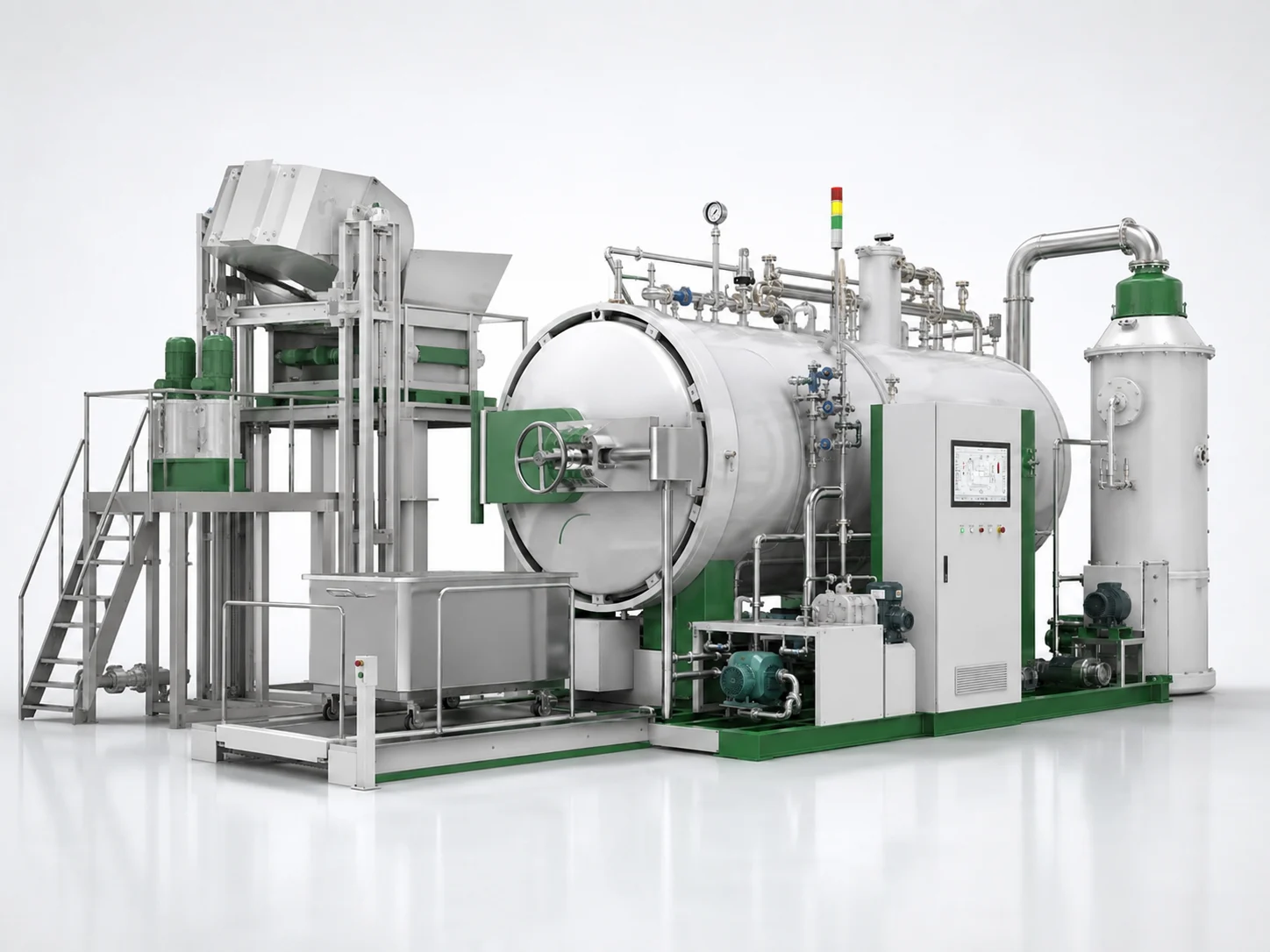
Medical Waste Autoclave Machine
Products Details
Medical Waste Autoclave Machines are designed for the safe sterilization and treatment of infectious healthcare waste before final disposal or volume reduction. They are mainly used in medical waste treatment plants and in facilities that need a clean, reliable, and standardized solution for handling potentially infectious waste. This type of medical waste autoclave system is suitable for waste generated by hospitals, clinics, laboratories, healthcare centers, and other medical institutions where infection control and operator safety are critical.
The system works through a high-vacuum, high-temperature, and high-pressure steam sterilization process. Under standard operating conditions of 134°C and 2.2 bar, the autoclave achieves 6 log10 microbial inactivation, which corresponds to 99.9999% sterilization efficiency. This level of performance makes medical waste autoclaves a strong solution for facilities that require dependable biological decontamination before further handling of the waste. The use of saturated steam allows deep penetration into the waste load and supports effective destruction of harmful microorganisms without relying on combustion, hazardous chemicals, or radiation.
One of the main advantages of Pharmaceutical Autoclaves is that the sterilization stage is performed before shredding. In this operating logic, infectious waste is first neutralized inside the autoclave chamber, and only after the sterilization cycle is completed is the material transferred for physical destruction or volume reduction. This sequence improves safety during downstream mechanical handling and helps reduce the risk of contamination inside the treatment facility. It also gives greater flexibility in plant design and maintenance planning, especially for centralized treatment centers managing large and variable waste volumes.
Medical waste autoclaves can be configured as single units or as part of a complete treatment line. A typical installation may include the autoclave, anti-stick autoclave bins, vacuum system, condensation and deodorization tower, PLC control cabinet, and automatic loading platform.
Depending on project requirements, the line can also include a shredder, steam boiler, automatic transfer system, medical waste container washer, workshop air deodorization system, sewage treatment and recycling system, and centralized monitoring equipment. This makes the solution highly adaptable to different site conditions, treatment capacities, and customer requirements.
Compared with traditional treatment methods, Medical Waste Autoclaves provide a cleaner and more environmentally friendly approach. Since the process relies on steam sterilization rather than direct combustion, it avoids combustion emissions and reduces the environmental burden associated with thermal destruction processes. At the same time, it maintains strong infection-control performance and supports safe, professional, and efficient waste treatment operations. For healthcare waste operators seeking a modern non-incineration solution, a medical waste autoclave machine offers an effective balance of safety, flexibility, and regulatory reliability.
Product Drawing
| Designation | Characteristics |
| Reference | Medical Waste Autoclave Machine |
| Application | Medical waste treatment plants, hospitals, clinics, laboratories, healthcare centers |
| Capacity of a Single Unit | 100 kg – 1 ton per cycle |
| Working Type | High-vacuum, high-pressure steam sterilization system |
| Working Temperature and Pressure | 134°C, 2.2 bar (adjustable) |
| Microbial Inactivation | 6 log10 (99.9999%) |
| Treatment Process | Waste is first sterilized in the autoclave, then transferred for shredding or volume reduction |
| Sterilization Principle | Saturated steam penetration under vacuum and pressure |
| System Form | Standalone unit or integrated treatment line |
| Standard Configuration | Autoclave chamber, anti-stick bins, vacuum pump, condensation and deodorization tower, PLC control cabinet, automated loading platform |
| Optional Configuration | Shredder, steam boiler, transfer line, container washer, sewage treatment and recycling system, workshop air deodorization system, centralized monitoring |
| Main Advantages | High sterilization efficiency, safer post-treatment handling, modular design, environmentally friendly process |
| Installation Type | Suitable for medium and large centralized medical waste treatment projects |
How do Medical Waste Autoclaves work?
Medical Waste Autoclaves work by using saturated steam under high temperature and pressure to sterilize infectious medical waste. During the treatment cycle, the chamber first creates a high-vacuum environment, then injects steam to ensure deep and uniform penetration through the waste load. This process destroys harmful microorganisms and makes the waste safe for the next processing stage.
In this treatment method, sterilization and shredding are carried out as two separate steps. First, the waste is completely sterilized inside the autoclave chamber. After sterilization is completed, the treated material can be transferred to a shredder for size reduction and easier downstream handling. This working sequence improves safety, reduces contamination risks during mechanical treatment, and supports stable, controlled operation for professional medical waste treatment facilities.
Application and Case
Medical Waste Autoclaves are suitable for:
- Hospitals
- Clinics
- Laboratories
- Healthcare centers
- Centralized medical waste treatment plants
- Infectious waste sterilization projects
- Non-incineration healthcare waste treatment facilities
Medical Waste Autoclaves are especially suitable for projects that require reliable sterilization, high infection-control performance, and a cleaner non-incineration treatment process. They are a practical solution for professional healthcare waste operators looking for safe, efficient, and environmentally responsible medical waste treatment systems. Because they can be configured as individual units or as part of a complete Waste Autoclave treatment line, they are well suited for both medium-scale and large-scale medical waste treatment operations.