
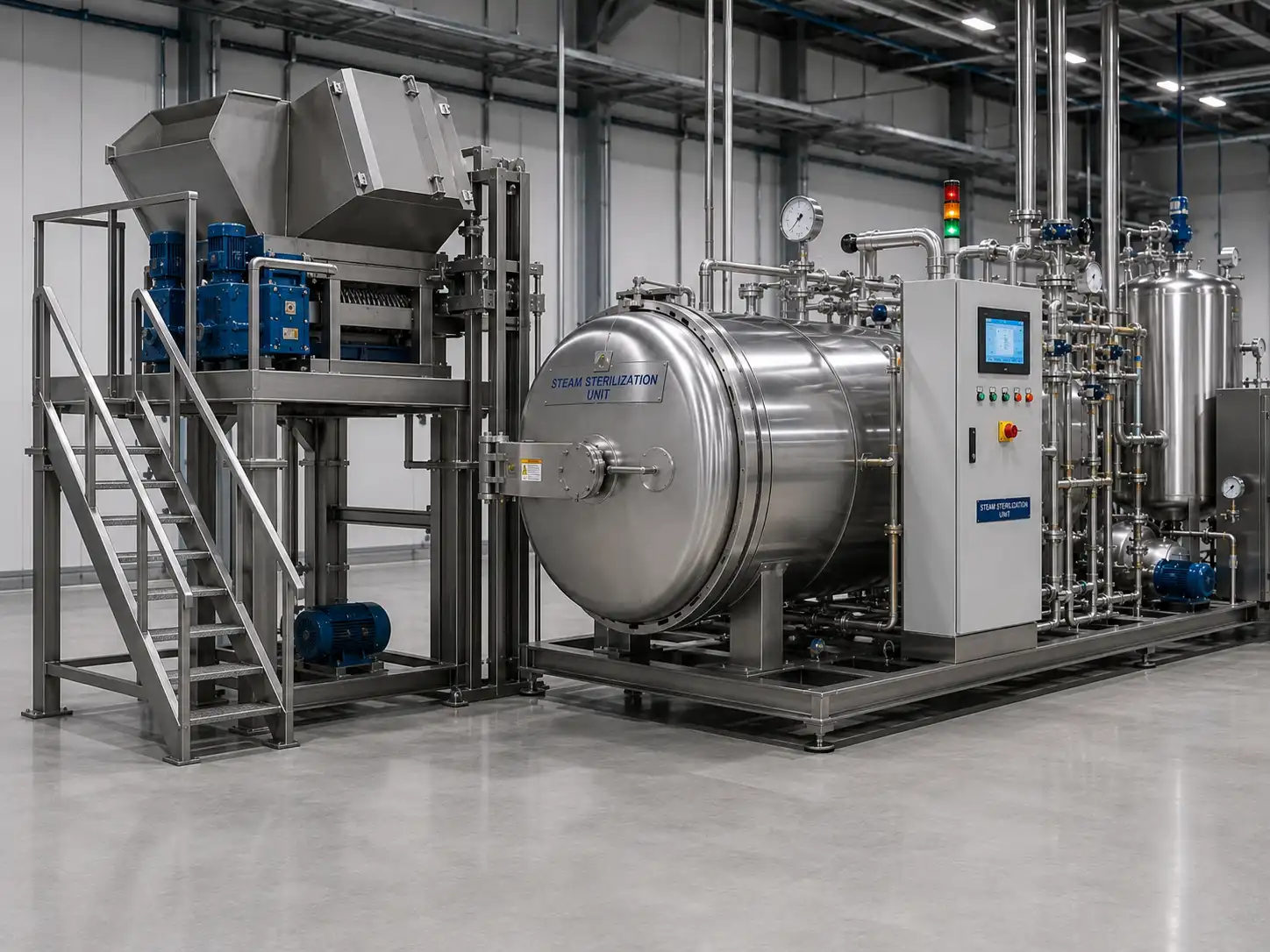
Pressure Steam Sterilizer Units
Products Details
Pressure Steam Sterilizer Units are designed to provide safe, reliable, and repeatable sterilization through the controlled use of saturated steam. They are widely used in medical, laboratory, pharmaceutical, and industrial environments where materials must be sterilized before reuse, storage, transport, or further processing. These units are suitable for institutions and facilities that require a clean sterilization process with stable thermal performance, process control, and high operational reliability.
The main operating principle of a pressure steam sterilizer unit is based on exposing the load to saturated steam under controlled temperature and pressure conditions for a defined holding time. Steam transfers heat very efficiently, which makes it one of the most effective and widely accepted sterilization methods for many types of equipment, tools, containers, textiles, and controlled materials. Depending on the application, the sterilization cycle is adjusted according to the type of load, required exposure time, and operational standards.
One of the main advantages of Steam Sterilization Units is their ability to provide uniform heat penetration and dependable sterilization performance. In standard operation, the chamber is designed to distribute steam evenly and reduce the risk of incomplete sterilization. Many systems also include air-removal or vacuum-assist functions to improve steam penetration into porous, dense, or packaged loads. This improves process efficiency and helps achieve more consistent results in demanding sterilization applications.
Another important strength of these units is their versatility. Steam sterilization can be used in a wide range of sectors, from healthcare and laboratory operations to pharmaceutical production and industrial process control. Depending on the project, the system can be supplied as a compact standalone unit or as part of a larger sterilization line with loading trolleys, transfer systems, PLC-based controls, data recording, and utility modules. This flexibility allows the equipment to be adapted to different load sizes, treatment frequencies, and site conditions.
From an operational point of view, Steam Sterilization Units are valued because they provide a clean and efficient non-combustion process. The sterilization action is achieved through steam rather than flame or aggressive chemical destruction, which makes the process suitable for controlled environments that require hygienic and standardized operation. Their robust chamber construction, programmable cycles, and compatibility with automation also make them a practical long-term solution for facilities that need stable and professional sterilization performance.
For many users, a steam sterilizer unit is more than a sterilizer — it is part of a complete hygiene, biosafety, and quality-control system. Whether it is used for medical tools, laboratory materials, reusable equipment, or controlled waste treatment, it offers a dependable method for reducing biological contamination while supporting safer handling and better process consistency.
Product Drawing
| Designation | Characteristics |
| Reference | Steam Sterilization Units |
| Application | Hospitals, laboratories, pharmaceutical facilities, research centers, industrial sterilization operations |
| Capacity | Configurable according to project requirements |
| Working Type | Saturated steam sterilization system |
| Working Temperature | Typically 121°C to 134°C |
| Working Pressure | Typically 1.1 to 2.2 bar |
| Sterilization Principle | Steam sterilization under controlled temperature, pressure, and time |
| Cycle Control | Programmable sterilization cycles with adjustable parameters |
| Chamber Type | Horizontal or vertical pressure chamber, depending on application |
| Load Types | Instruments, tools, containers, textiles, reusable materials, controlled waste streams |
| Control System | PLC or digital touch-screen control panel |
| Standard Components | Pressure chamber, steam system, control panel, safety valves, pressure gauges |
| Optional Components | Vacuum system, loading trolley, automatic doors, transfer system, data recording, monitoring modules |
| Construction Material | Heavy-duty stainless steel |
| Main Advantages | Reliable sterilization, uniform heat transfer, programmable operation, clean process |
| Installation Use | Medium and large sterilization projects |
How do Steam Sterilization Units work?
Steam Sterilization Units work by placing the load inside a sealed chamber and exposing it to saturated steam at controlled temperature and pressure for a specific holding time. The steam transfers heat rapidly and evenly to the treated load, raising it to the sterilization temperature required to destroy microorganisms and biological contaminants.
A standard cycle may include air removal, steam injection, heating, holding time, pressure stabilization, and controlled cooling before unloading. In more advanced systems, vacuum assistance is used to improve steam penetration, especially for dense or packaged materials. The entire process is managed through a programmable control system to ensure repeatable sterilization performance, safe operation, and cycle consistency.
Application and Case
Steam Sterilization Units are suitable for:
- Hospitals
- Clinics
- Laboratories
- Pharmaceutical facilities
- Research centers
- Medical device sterilization operations
- Reusable equipment sterilization projects
- Controlled waste treatment applications
Pressure Steam Sterilizer Units are especially suitable for facilities that require a professional, efficient, and standardized sterilization process. They provide a reliable solution for users who need strong sterilization performance, programmable operation, and a clean steam-based treatment method. With their durable construction and flexible configuration, they are widely used in sectors where hygiene, safety, and process consistency are essential as a trusted Waste Autoclave solution.