Waste Sterilization Equipment for Safe Waste Treatment
High-pressure Industrial Autoclave Sterilizers engineered for complete microbial inactivation (≥ 6 log10 reduction) and non-incinerative medical waste decontamination.
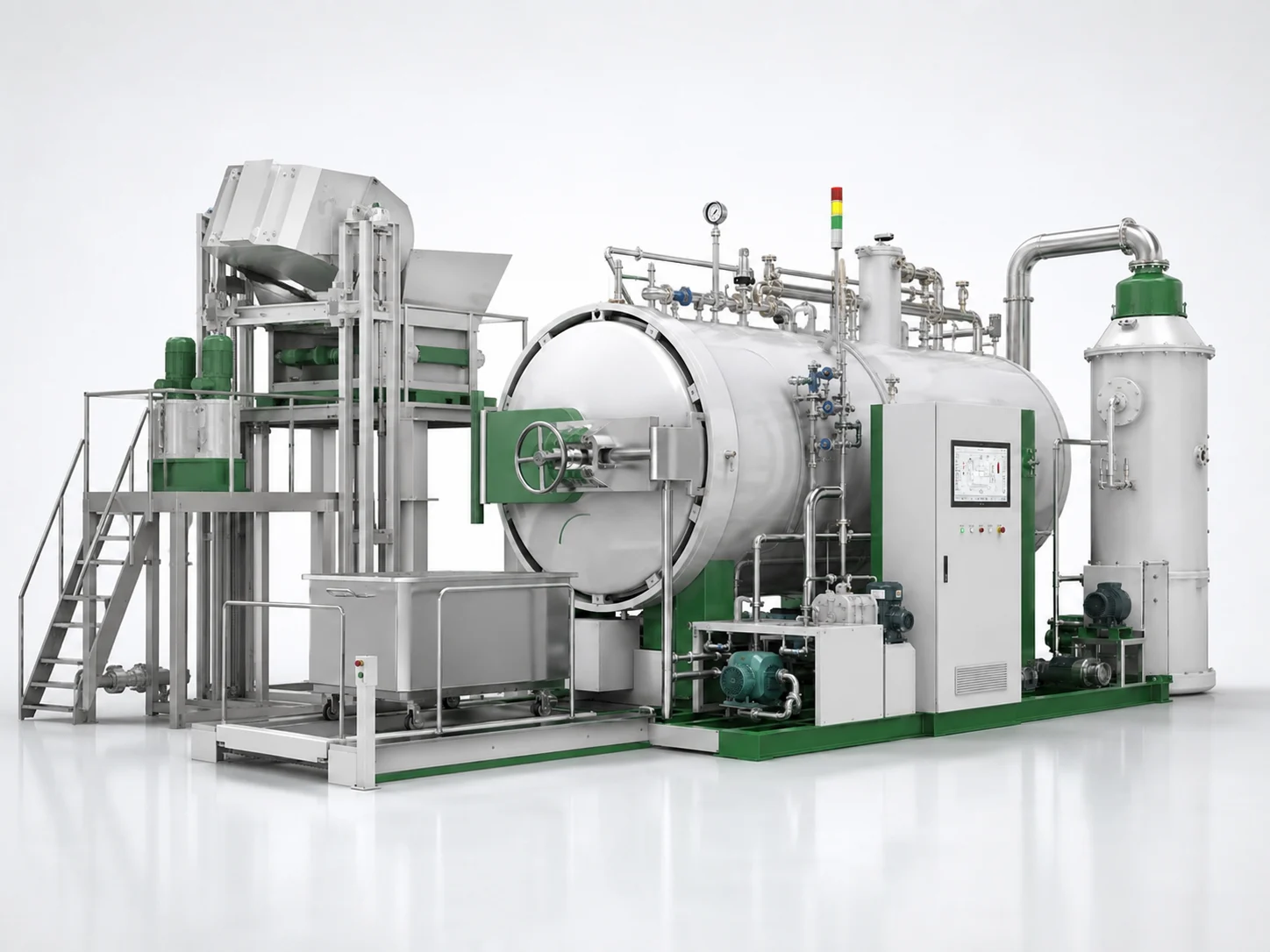
Heavy-Duty Waste Autoclaves & Industrial Steam Sterilization Systems
Biowas designs and manufactures industrial-grade Waste Autoclaves and High-pressure autoclave machines. Engineered for complete thermal inactivation of infectious pathogens, our saturated steam sterilization systems deliver safe, non-incinerative bio-decontamination across healthcare, pharmaceutical, laboratory, and agricultural waste management sectors.
BIOWAS Autoclave Sterilization Solutions
Explore our specialized high-pressure autoclave configurations engineered for specific waste density, steam penetration requirements, and processing capacities.
-
Heavy-duty vacuum autoclaves engineered for biohazardous clinical waste, sharps containers, and infectious anatomical materials, ensuring complete pathogen elimination.
-
Hospital Sterilization Systems
Centralized steam sterilization plants tailored for hospital waste treatment centers, delivering rapid thermal cycle times and automated loading integration.
-
Precision high-pressure autoclaves built for research facilities, bio-containment labs, and pharmaceutical plants to sterilize culture media, glassware, and hazardous liquid waste.
-
Large-capacity horizontal autoclaves designed for continuous industrial waste decontamination, featuring heavy-duty pressure vessels and quick-actuating doors.
-
Advanced saturated steam thermal units utilizing multi-stage pre-vacuum pulses to ensure full steam penetration into complex porous waste loads.
-
Containerized Autoclave Systems
Self-contained, plug-and-play mobile autoclave units fully integrated into heavy-duty ISO containers for field hospitals, remote camps, and emergency response operations.
-
Turnkey systems combining internal waste shredding with high-temperature steam sterilization in a single vessel, achieving up to 80% volume reduction.
Why Choose BIOWAS Medical Waste Sterilization Systems
Selecting the correct waste treatment technology requires balancing throughput efficiency, biological safety compliance, and long-term operational costs.
1. Effective Infectious Waste Treatment
BIOWAS medical waste autoclaves utilize fractionated pre-vacuum pulses combined with high-temperature saturated steam (121℃–138℃). This ensures complete steam penetration into dense waste loads and guarantees a verified 6 log₁₀ reduction of resistant pathogens (Geobacillus stearothermophilus).
2. Designed for Different Waste Capacities
From compact 100 L units for localized clinics to high-throughput 10,000+ L continuous pressure vessels for centralized regional facilities, BIOWAS custom-configures system dimensions and cycle parameters based on your daily waste generation profile.
3. Safe and Controlled Sterilization Process
Every BIOWAS system is integrated with automated Siemens PLC controllers, monitoring chamber pressure, temperature distribution, and F₀ lethal values in real time. Safety features include double-inflation door seals, mechanical interlocks, and emergency depressurization overrides.
4. Complete Waste Treatment Integration
For projects requiring complete volume reduction and total waste destruction, BIOWAS provides integrated processing chains combining autoclaves with heavy-duty shredders, or offers thermal destruction through our custom Waste Incinerator systems to comply with regional waste management regulations.
Industrial Applications & Treatment Scenarios
Engineered for Critical Healthcare & Biological Safety Standards
Biowas Waste Autoclave Systems deliver reliable, non-incinerative biological decontamination across high-compliance industrial and medical sectors:
-
Hospitals & Regional Healthcare Waste Centers
Centralized, high-throughput steam sterilization of infectious hospital waste, reducing bio-hazardous risks prior to municipal landfilling.
-
Pharmaceutical Manufacturing & Biotech Facilities
Decontamination of production waste streams, cell cultures, bio-reactors, and contaminated PPE under strict GMP and biosafety guidelines.
-
Research Laboratories & Animal Housing Units
Sterilization of animal bedding, biological waste, and laboratory instruments operating under BSL-2 to BSL-4 biosafety containment protocols.
-
Quarantine Centers & Airport Bio-Security
Rapid thermal processing of international flight waste, agricultural quarantine materials, and potentially contaminated import goods.
General System Specifications
| Technical Parameter | Engineering Options & Standard Range |
| Chamber Capacity | 100 L to 10,000+ L (Custom horizontal or vertical pressure vessel) |
| Operating Temperature | 121℃ – 138℃ (Adjustable thermal cycle parameters) |
| Operating Pressure | 0.12 MPa to 0.35 MPa (Pressure vessel rated to high-safety margins) |
| Microbial Inactivation | ≥ 6 log10 reduction (Biological indicator validation) |
| Vessel Material | Stainless Steel AISI 304 / 316L (ASME / PED certified) |
| Automation & Control | Siemens PLC with HMI Touchscreen, F0 Calculation & Data Recorder |
How Does a Medical Waste Autoclave Work?
Understanding the multi-stage steam sterilization process ensures operational safety and regulatory validation.
-
Waste Loading: Biohazardous waste packed in autoclavable bags or specialized carts is loaded into the heavy-duty pressure vessel.
-
Air Removal: A liquid ring vacuum pump executes multiple pre-vacuum pulses to completely evacuate trapped air pockets from dense waste loads.
-
Steam Sterilization: High-pressure saturated steam is injected into the chamber, raising temperatures to 121℃–138℃ and maintaining set exposure times for full pathogen destruction.
-
Cooling and Drying: Post-sterilization steam is evacuated, and a post-vacuum drying cycle cools the waste and removes condensed moisture.
-
Safe Disposal: The treated waste is rendered non-infectious, safe for secondary shredding, recycling, or standard municipal landfilling.
Autoclave Sterilization vs. Waste Incineration
Choosing between steam autoclaving and incineration depends on waste composition, environmental emission limits, and local regulatory mandates.
| Feature / Metric | Autoclave Sterilization | Waste Incineration |
| Primary Process Mechanism | Thermal sterilization via high-pressure saturated steam | High-temperature thermal oxidation & combustion |
| Operating Temperature | 121℃ – 138℃ | 850℃ – 1200℃ |
| Target Waste Stream | Infectious clinical waste, labware, sharps, textiles | Anatomical waste, toxic sludges, mixed solid waste |
| Environmental Emissions | Zero flue gas emissions; chemical-free process | Requires multi-stage flue gas treatment scrubbers |
| Volume Reduction | 15% – 20% (up to 80% if paired with integrated shredder) | ≥ 95% ash volume reduction |
| System Recommendation | Ideal for non-pathological medical waste | Required for pathological, anatomical, & chemical waste |
Technical Services & After-Sales Support
Full-Lifecycle Engineering & Field Support
Biowas provides end-to-end technical support across all our Industrial Waste Treatment Solutions to ensure uninterrupted biological safety and compliance with international healthcare standards.
Engineering Expertise & Laboratory Testing
As a recognized Waste Treatment Equipment Factory, our bio-engineering laboratory performs steam penetration testing, thermal distribution mapping, and biological indicator validation to optimize cycle parameters for your waste stream.
On-Site Installation & Vessel Certification
Senior mechanical and pressure vessel engineers oversee field positioning, boiler steam piping integration, vacuum testing, safety valve calibration, and regulatory pressure vessel registration.
Operator Training & Biosafety Protocol
Comprehensive hands-on training for facility operators covering PLC cycle selection, biological indicator testing, door seal maintenance, and emergency depressurization protocols.
Pressure Vessel Spares & Remote Assistance
Continuous supply of critical spare parts—including high-temp door gaskets, safety valves, steam traps, and vacuum pump impellers—backed by remote PLC diagnostic capabilities.
Frequently Asked Questions
1. What types of waste can be treated by a medical waste autoclave?
Medical waste autoclaves are designed to sterilize infectious clinical waste, contaminated PPE, surgical dressings, sharps containers, culture media, and biological labware. Pathological waste (human tissue) and chemical waste typically require thermal destruction via an incinerator.
2. How do I select the right waste sterilization system?
Selection depends on your daily waste generation volume (kg/day), waste density, facility space, available steam supply (in-house steam vs. integrated boiler), and local environmental disposal regulations. BIOWAS engineers assist in evaluating these parameters to specify the correct chamber size and cycle automation.
3. Can BIOWAS customize an autoclave sterilization system for my project?
Yes. As an OEM manufacturer, BIOWAS custom-engineers pressure vessel dimensions, loading systems (manual carts vs. automated hoppers), structural mounting (skid-mounted vs. ISO containerized), and integrated pre/post-shredders for your exact operational requirements.
4. Is autoclave sterilization an alternative to waste incineration?
Yes, for infectious non-pathological waste, autoclaving is a widely accepted, environmentally friendly alternative to incineration. It operates without combustion or flue gas emissions. However, for pathological anatomical waste or toxic pharmaceuticals, high-temperature incineration remains the required regulatory standard.